
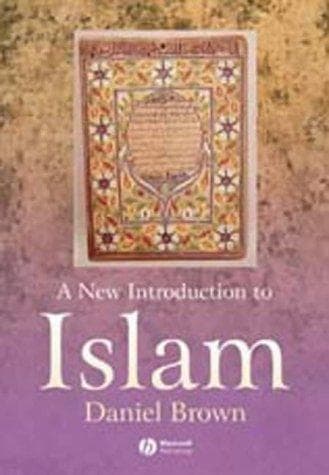
A New Introduction to Islam
مقدمة جديدة للإسلام
Une nouvelle introduction à l'islam
Editorial summary
This comprehensive textbook provides a systematic introduction to Islamic history, doctrine, and practice while examining how Muslim theological perspectives shape contemporary understandings of divine nature and human-divine relations. Brown structures his analysis chronologically and thematically, moving from the origins of Islam through its classical development to modern manifestations, consistently highlighting how Islamic monotheism informs all aspects of Muslim life and thought.
The work's treatment of God centers on tawhid, the fundamental Islamic principle of divine unity. Brown explicates how this radical monotheism distinguishes Islam from both polytheistic traditions and trinitarian Christianity, analyzing Quranic teachings about divine attributes, names, and actions. He examines classical theological debates between rationalist Mutazilites and traditionalist Asharis regarding divine justice, human free will, and the created or eternal nature of the Quran, demonstrating how these controversies shaped orthodox Sunni theology's understanding of an absolutely transcendent yet immanently active deity.
Brown's methodology combines historical analysis with phenomenological description, drawing on primary sources including Quranic exegesis, hadith literature, and theological treatises. He situates Islamic concepts of divinity within broader Abrahamic traditions while emphasizing Islam's distinctive theological contributions. The text explores how Sufism developed experiential approaches to divine encounter that complemented legalistic orthodoxy, and how modern reformist movements from Salafism to Islamic modernism have reinterpreted classical theologies for contemporary contexts.
Particularly valuable is Brown's examination of how Islamic theology addresses perennial questions in philosophy of religion: the problem of evil in relation to divine omnipotence, the compatibility of divine foreknowledge with human responsibility, and the epistemological grounds for knowing God through revelation versus reason. He analyzes how Muslim thinkers from al-Ghazali to Ibn Rushd engaged these issues, contributing sophisticated arguments to broader theistic philosophy.
The work serves as an essential resource for understanding Islamic contributions to global theological discourse. By presenting Islam's complex intellectual traditions accessibly while maintaining scholarly rigor, Brown enables readers to grasp how Muslim thought has developed distinctive approaches to conceiving divinity, revelation, and human purpose. His balanced treatment avoids both apologetics and reductionism, allowing Islamic theology to speak on its own terms while facilitating comparative theological reflection.
Argument formulations engaged
Brown, Daniel W. (2004). A New Introduction to Islam. John Wiley & Sons, Incorporated.
@book{a-new-introduction-to-islam-2004,
  author    = {Brown, Daniel W.},
  title     = {A New Introduction to Islam},
  year      = {2004},
  publisher = {John Wiley & Sons, Incorporated},
  url       = {https://god-database.com/en/works/a-new-introduction-to-islam-2004}
}