
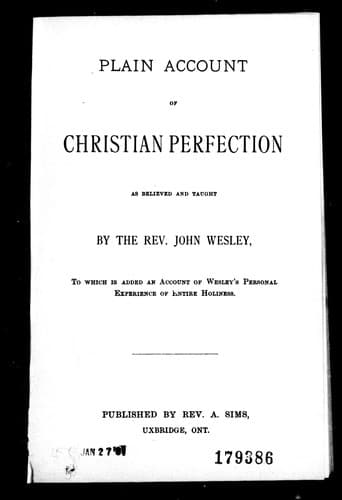
A Plain Account of Christian Perfection
تقرير بسيط عن الكمال المسيحي
Un récit simple de la perfection chrétienne
Editorial summary
John Wesley's "A Plain Account of Christian Perfection" (1777) represents a pivotal work in eighteenth-century Protestant theology, articulating a controversial doctrine that significantly shaped Methodist spirituality and broader evangelical understandings of sanctification. Writing against both antinomian tendencies and traditional Reformed views of inherent sinfulness, Wesley advances the possibility of achieving Christian perfection or "entire sanctification" in this life through divine grace.
The monograph systematically defends the notion that believers can attain a state of perfect love toward God and neighbor, free from voluntary sin though not from human infirmities or errors of judgment. Wesley carefully distinguishes his position from claims of absolute perfection or freedom from temptation, arguing instead for a dynamic state of grace wherein the heart is purified from sinful desires and filled with divine love. This formulation directly challenges Westminster Confession theology and Calvin's doctrine of total depravity, proposing a more optimistic view of human transformation through grace.
Wesley employs a distinctive methodology combining scriptural exegesis, empirical observation of religious experience, and reasoned theological argument. He draws extensively from biblical passages, particularly from the Johannine epistles and Paul's writings, while also incorporating testimonies from contemporary Methodist converts who claimed to have experienced this perfection. This appeal to religious experience as theological evidence marks a significant departure from purely doctrinal approaches to the God-human relationship.
The work's contribution to debates about divine-human interaction proves substantial. Wesley presents God not merely as judge or sovereign but as transformative agent actively perfecting believers through prevenient, justifying, and sanctifying grace. This theological anthropology assumes human capacity for radical moral transformation through divine empowerment, positioning humanity as capable of genuine holiness rather than merely forensic righteousness.
Wesley's treatise sparked intense controversy within Protestantism, with critics charging him with promoting works-righteousness or unrealistic spiritual expectations. Yet his vision of achievable holiness profoundly influenced subsequent holiness movements, Pentecostalism, and liberation theologies that emphasize God's power to transform both individual hearts and social structures. The work remains central to understanding how certain Christian traditions conceive the possibilities and limits of divine grace in human moral development, offering a distinctly optimistic account of what God can accomplish in willing human subjects.
Argument formulations engaged
Wesley, John (1777). A Plain Account of Christian Perfection. Unforgotten Classics.
@book{a-plain-account-of-christian-perfection-,
  author    = {Wesley, John},
  title     = {A Plain Account of Christian Perfection},
  year      = {1777},
  publisher = {Unforgotten Classics},
  url       = {https://god-database.com/en/works/a-plain-account-of-christian-perfection-1777}
}