
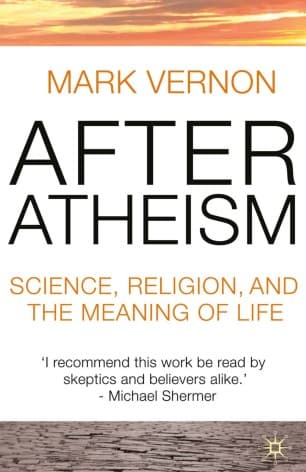
After Atheism: Science, Religion and the Meaning of Life
بعد الإلحاد: العلم والدين ومعنى الحياة
Après l'Athéisme : Science, Religion et le Sens de la Vie
Editorial summary
Vernon's After Atheism examines the intellectual and spiritual terrain that emerges when atheism itself becomes insufficient as a worldview. The work argues that while atheism successfully critiques religious dogmatism, it often fails to address fundamental human questions about meaning, purpose, and transcendence. Vernon contends that the stark choice between conventional theism and reductive atheism represents a false dichotomy that impoverishes contemporary discourse about ultimate reality.
The author traces his own journey from Anglican priesthood through atheism to what he terms "Christian agnosticism," using this personal narrative to illuminate broader philosophical issues. Vernon critiques the New Atheist movement, particularly figures like Richard Dawkins and Daniel Dennett, for reducing religion to mere belief in supernatural entities while ignoring its experiential, ethical, and aesthetic dimensions. He argues that scientific materialism, despite its explanatory power in certain domains, cannot adequately account for consciousness, moral value, or existential meaning.
Vernon draws extensively on ancient philosophy, particularly Socratic ignorance and apophatic theology, to develop an approach that maintains intellectual humility while remaining open to transcendent possibilities. He examines how great scientists like Einstein and Darwin maintained nuanced positions on religious questions that defy simple categorization as either theistic or atheistic. The work engages seriously with Buddhist and Eastern philosophical traditions, suggesting that Western debates about God often suffer from overly narrow conceptual frameworks.
The monograph's central contribution lies in articulating a position beyond the theism-atheism binary. Vernon advocates for what he calls "faithful agnosticism" - an stance that acknowledges human limitations in knowing ultimate reality while maintaining that questions of meaning and value cannot be eliminated through reductionist explanations. He argues that post-atheist thought must recover appreciation for mystery, symbol, and myth without abandoning rational inquiry.
Vernon's work matters because it offers intellectually rigorous alternatives to both fundamentalist religion and dogmatic atheism. By examining how various thinkers have navigated between these extremes, he provides resources for those who find conventional positions unsatisfactory. The book challenges readers to consider whether the most honest intellectual position might involve embracing uncertainty while remaining open to transcendent dimensions of human experience. Vernon ultimately suggests that moving beyond atheism need not mean returning to traditional theism but rather developing more sophisticated frameworks for engaging perennial questions.
Argument formulations engaged
Related works
Vernon, Mark (2007). After Atheism: Science, Religion and the Meaning of Life. Palgrave Macmillan.
@book{after-atheism-science-religion-and-the-m,
  author    = {Vernon, Mark},
  title     = {After Atheism: Science, Religion and the Meaning of Life},
  year      = {2007},
  publisher = {Palgrave Macmillan},
  url       = {https://god-database.com/en/works/after-atheism-science-religion-and-the-meaning-of-life-2007}
}