
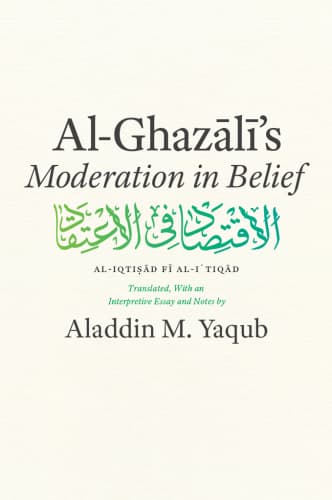
Al-Iqtisad fi al-i'tiqad (Moderation in Belief)
الاقتصاد في الاعتقاد
Al-Iqtisad fi al-i'tiqad (Modération dans la Croyance)
Editorial summary
Al-Ghazali's Al-Iqtisad fi al-i'tiqad represents a sophisticated theological synthesis that emerged during a period of intense intellectual ferment in Islamic thought. Written in 1095, this work addresses the pressing need for a middle path between the competing theological schools that dominated eleventh-century Islamic discourse. The text systematically presents rational proofs for fundamental Islamic beliefs while carefully navigating between the extremes of anthropomorphism and excessive abstraction in conceiving the divine nature.
The work's primary contribution to theological discourse lies in its methodological approach to establishing certainty about God's existence and attributes. Al-Ghazali employs kalam (rational theology) techniques to demonstrate divine existence through arguments from contingency and causation, while simultaneously critiquing both the Mu'tazilite position that overemphasizes reason and the literalist approach that rejects philosophical inquiry. His treatment of divine attributes occupies substantial portions of the text, where he develops a nuanced position that affirms God's essential attributes without compromising divine transcendence.
Al-Ghazali's intellectual context shapes the work's polemical dimensions. Writing after his tenure at the Nizamiyyah college in Baghdad, he engages critically with falsafa (Islamic philosophy) while defending Ash'arite theological positions. The text specifically counters the necessitarian metaphysics of Ibn Sina and addresses concerns about divine voluntarism raised by Mu'tazilite thinkers. His arguments for occasionalism—the doctrine that God is the only true cause of all events—provide a theoretical foundation for understanding divine action in the world without limiting divine freedom.
The significance of Al-Iqtisad extends beyond its immediate theological contributions. The work exemplifies al-Ghazali's broader project of intellectual synthesis, demonstrating how revealed theology can incorporate philosophical reasoning without subordinating revelation to reason. His careful delineation of the proper scope and limits of rational inquiry establishes parameters that influenced subsequent Islamic thought. The text's moderation, suggested by its title, manifests not as theological compromise but as methodological precision in applying appropriate tools to different aspects of religious knowledge.
For contemporary discussions about God, Al-Iqtisad remains valuable for its sophisticated treatment of perennial issues: the relationship between reason and revelation, the coherence of divine attributes, and the nature of religious certainty. Al-Ghazali's balanced approach offers resources for those seeking to articulate theistic belief within a framework that acknowledges both rational inquiry and the limits of human comprehension.
Argument formulations engaged
al-Ghazali, Abu Hamid (1095). Al-Iqtisad fi al-i'tiqad (Moderation in Belief).
@book{al-iqtisad-fi-al-itiqad-moderation-in-be,
  author    = {al-Ghazali, Abu Hamid},
  title     = {Al-Iqtisad fi al-i'tiqad (Moderation in Belief)},
  year      = {1095},
  url       = {https://god-database.com/en/works/al-iqtisad-fi-al-itiqad-moderation-in-belief-1095}
}