
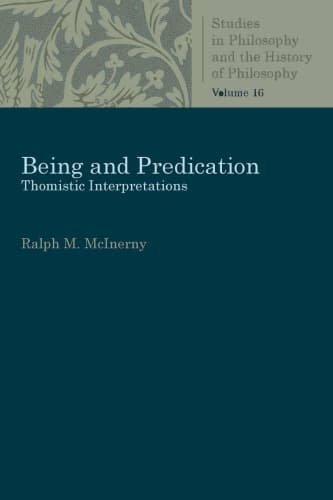
Being and Predication: Thomistic Interpretations
الوجود والإخبار: تفسيرات توماسية
Être et prédication : Interprétations thomistes
Editorial summary
This edited volume examines the complex relationship between being and predication in Thomistic philosophy, offering multiple contemporary perspectives on how Thomas Aquinas's metaphysical framework addresses fundamental questions about existence, essence, and linguistic expression. The collection situates itself within the broader revival of Thomistic studies while engaging critically with modern philosophical concerns about language, logic, and ontology.
The contributors explore how Aquinas's distinction between esse (being) and essentia (essence) shapes his understanding of predication—the way properties or characteristics are attributed to subjects in propositions. This investigation proves particularly significant for theological discourse, as it bears directly on how human language can meaningfully speak about God. The volume examines Aquinas's doctrine of analogical predication, which maintains that terms applied to both God and creatures are neither purely univocal (having identical meaning) nor purely equivocal (having entirely different meanings), but analogical, preserving both similarity and difference.
McInerny's collection addresses several interpretive controversies within Thomistic scholarship. Central debates include whether Aquinas's theory of being should be understood primarily through existential or essentialist lenses, how his account of predication relates to contemporary philosophy of language, and whether his metaphysical framework can withstand post-Kantian critiques. The contributors engage with both historical sources and contemporary analytical philosophy, demonstrating how medieval insights remain relevant to current philosophical discussions.
The work's significance for the God debate emerges through its treatment of theological language. By clarifying how Aquinas understands the relationship between being and predication, the volume illuminates his approach to divine attributes and the possibility of meaningful theological discourse. The contributors show how Aquinas's metaphysical realism grounds his confidence that human language, despite its limitations, can make true statements about divine reality. This position stands in marked contrast to both modern skepticism about religious language and certain forms of negative theology that emphasize divine ineffability.
The volume represents a sophisticated defense of Thomistic metaphysics against various modern challenges while acknowledging genuine difficulties in Aquinas's position. It demonstrates how careful attention to technical philosophical distinctions—particularly regarding being and predication—remains essential for evaluating classical arguments about God's existence and nature. The work thus contributes to ongoing debates about whether traditional metaphysical approaches to theology remain philosophically viable in contemporary contexts.
Argument formulations engaged
McInerny, Ralph (1986). Being and Predication: Thomistic Interpretations. Catholic University of America Press.
@book{being-and-predication-thomistic-interpre,
  author    = {McInerny, Ralph},
  title     = {Being and Predication: Thomistic Interpretations},
  year      = {1986},
  publisher = {Catholic University of America Press},
  url       = {https://god-database.com/en/works/being-and-predication-thomistic-interpretations-1986}
}