
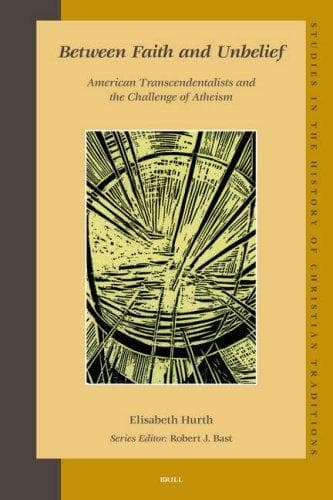
Between Faith and Unbelief.. American Transcendentalists and the Challenge of Atheism
بين الإيمان والكفر.. المتعاليون الأمريكيون وتحدي الإلحاد
Entre foi et incroyance.. Les transcendantalistes américains et le défi de l'athéisme
American Transcendentalism occupied an unstable middle ground between inherited Christian faith and the emerging challenge of atheism, forcing its thinkers to renegotiate the boundaries of belief, doubt, and spiritual meaning.
Editorial summary
Elisabeth Hurth's monograph examines the complex relationship between American Transcendentalism and atheism during the nineteenth century, revealing how key figures in this movement navigated between traditional theism and radical unbelief. Through meticulous intellectual history, Hurth demonstrates that Transcendentalism occupied a liminal space that both challenged orthodox Christianity and resisted outright atheism, creating a distinctive position in American religious thought.
The work traces how major Transcendentalists including Ralph Waldo Emerson, Theodore Parker, and Margaret Fuller engaged with atheistic ideas emerging from German philosophy and biblical criticism while ultimately maintaining forms of spiritual belief. Hurth argues that these thinkers developed what she terms "religious naturalism" - a position that rejected supernatural revelation and institutional Christianity while affirming divine presence in nature and human consciousness. This stance proved particularly challenging to articulate, as Transcendentalists faced accusations of atheism from conservative Christians while simultaneously distancing themselves from materialist atheism.
Hurth's analysis reveals how Transcendentalists appropriated and transformed European skeptical thought, particularly German idealism and higher criticism, to serve their reformist spiritual agenda. She demonstrates that figures like Parker engaged seriously with atheistic arguments about biblical authority and miracle claims, accepting much of their critical force while stopping short of abandoning belief in divinity altogether. The monograph shows how this intellectual balancing act reflected broader tensions in antebellum American culture between Enlightenment rationalism and romantic spirituality.
The study makes significant contributions by complicating standard narratives about secularization in America. Rather than presenting a simple trajectory from faith to unbelief, Hurth reveals how Transcendentalism created alternative forms of religiosity that incorporated skeptical challenges while maintaining spiritual commitments. Her work illuminates how American thinkers creatively responded to the "challenge of atheism" by developing new theological frameworks that neither embraced orthodoxy nor accepted materialism.
Through careful examination of published works, private correspondence, and contemporary debates, Hurth establishes Transcendentalism as a crucial mediating movement that shaped how Americans would subsequently think about relationships between reason, nature, and divinity. The monograph demonstrates that the movement's legacy lies not in resolving tensions between faith and skepticism but in articulating productive ways of inhabiting that tension.
Structured analysis
Structure of the work
Argument formulations engaged
Hurth, Elisabeth (2007). Between Faith and Unbelief.. American Transcendentalists and the Challenge of Atheism. BRILL.
@book{between-faith-and-unbelief-american-tran,
  author    = {Hurth, Elisabeth},
  title     = {Between Faith and Unbelief.. American Transcendentalists and the Challenge of Atheism},
  year      = {2007},
  publisher = {BRILL},
  url       = {https://god-database.com/en/works/between-faith-and-unbelief-american-transcendentalists-and-the-challenge-of-atheism}
}