
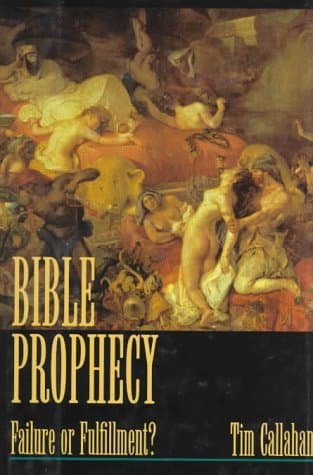
Bible Prophecy: Failure or Fulfillment?
نبوءة الكتاب المقدس: فشل أم تحقق؟
Prophétie biblique : Échec ou accomplissement ?
Editorial summary
Tim Callahan's "Bible Prophecy: Failure or Fulfillment?" presents a systematic critical examination of biblical prophecy claims, challenging the widespread belief that fulfilled prophecies demonstrate divine authorship of scripture. The work engages directly with evangelical and fundamentalist assertions about predictive prophecy as evidence for God's existence and intervention in human history.
Callahan employs a methodological approach grounded in historical-critical analysis, examining prophetic texts within their original contexts rather than through the lens of later interpretive traditions. He investigates major prophetic claims including predictions about the fate of ancient cities, the coming of the Messiah, and apocalyptic scenarios. His analysis reveals that many supposedly fulfilled prophecies were either written after the events they purport to predict, remain unfulfilled, or have been retrofitted to match historical occurrences through creative interpretation.
The work systematically addresses apologetic arguments that use prophecy as proof of divine inspiration. Callahan demonstrates how prophecy advocates often employ selective citation, ignore historical context, and utilize ambiguous language to claim fulfillment. He examines specific cases like the prophecies concerning Tyre and Egypt, showing how these predictions failed to materialize as written. The author also analyzes messianic prophecies, arguing that Christian interpretations frequently depend on mistranslations and passages taken out of context.
Callahan situates his critique within the broader scholarly consensus on biblical studies while making his analysis accessible to general readers. He draws on archaeology, ancient Near Eastern studies, and textual criticism to support his arguments. The work serves as a counterpoint to popular evangelical authors like Josh McDowell and Hal Lindsey who promote prophecy as evidence for God.
The significance of this monograph lies in its comprehensive challenge to a major pillar of religious apologetics. By demonstrating the human and fallible nature of biblical prophecy, Callahan undermines arguments that use predictive prophecy to establish supernatural causation or divine authorship. His work contributes to naturalistic explanations of religious texts and phenomena, supporting broader skeptical approaches to claims of divine revelation. The analysis provides tools for evaluating prophetic claims and exposes the interpretive mechanisms that sustain belief in prophecy despite evidential failures.
Argument formulations engaged
Callahan, Tim (1991). Bible Prophecy: Failure or Fulfillment?. Millennium Press.
@book{bible-prophecy-failure-or-fulfillment-19,
  author    = {Callahan, Tim},
  title     = {Bible Prophecy: Failure or Fulfillment?},
  year      = {1991},
  publisher = {Millennium Press},
  url       = {https://god-database.com/en/works/bible-prophecy-failure-or-fulfillment-1991}
}