
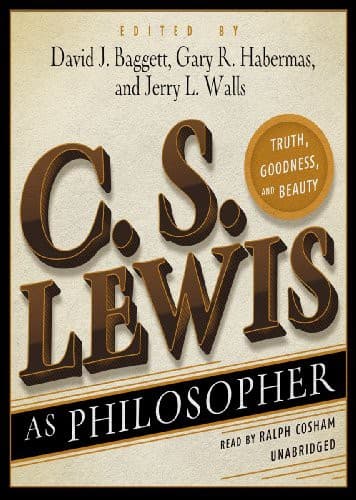
C. S. Lewis as Philosopher: Truth, Goodness, and Beauty
ك. س. لويس كفيلسوف: الحق والخير والجمال
C. S. Lewis comme philosophe : Vérité, bonté et beauté
Editorial summary
This edited volume examines C. S. Lewis's philosophical contributions to discussions of truth, goodness, and beauty, arguing for his significance as a rigorous philosophical thinker whose work bears directly on fundamental questions about God and ultimate reality. David Baggett assembles essays that collectively demonstrate how Lewis's philosophical arguments, often embedded within his literary and apologetic works, constitute a substantial contribution to theistic philosophy.
The volume addresses Lewis's epistemology, particularly his argument against naturalistic explanations of reason and his defense of objective truth as grounded in divine reality. Contributors analyze Lewis's critique of subjectivism and moral relativism, showing how he develops a robust moral argument for God's existence through his conception of natural law and the human experience of moral obligation. His famous argument from desire receives philosophical scrutiny, with essays exploring how Lewis grounds human longing for transcendence in the existence of a divine fulfillment.
Several chapters examine Lewis's aesthetic philosophy, demonstrating how he views beauty as a pointer to divine reality rather than mere subjective preference. The work engages Lewis's critique of reductionist accounts of human experience, particularly his resistance to explaining away religious and aesthetic experiences as merely psychological phenomena. Contributors situate Lewis within broader philosophical traditions, showing his debts to Plato, Augustine, and medieval philosophy while highlighting his original synthesis.
The volume takes seriously Lewis's philosophical method, which combines rigorous logical analysis with appeals to common human experience. Essays address criticisms of Lewis's arguments, particularly challenges to his moral argument and his reasoning about naturalism's self-refutation. The collection demonstrates how Lewis anticipates and responds to various forms of atheistic and skeptical philosophy, making him a significant voice in twentieth-century philosophy of religion.
By treating Lewis as a serious philosopher rather than merely a popular apologist, this volume establishes his work's relevance to contemporary debates about theism. The contributors show how Lewis's integration of reason, imagination, and experience offers a distinctive approach to perennial questions about God, one that avoids both dry rationalism and anti-intellectual fideism. His philosophical arguments emerge as sophisticated contributions to natural theology that continue to merit engagement from both theistic and non-theistic philosophers.
Argument formulations engaged
Related works
Baggett, David (2008). C. S. Lewis as Philosopher: Truth, Goodness, and Beauty. IVP Academic.
@book{c-s-lewis-as-philosopher-truth-goodness-,
  author    = {Baggett, David},
  title     = {C. S. Lewis as Philosopher: Truth, Goodness, and Beauty},
  year      = {2008},
  publisher = {IVP Academic},
  url       = {https://god-database.com/en/works/c-s-lewis-as-philosopher-truth-goodness-and-beauty-2008}
}