
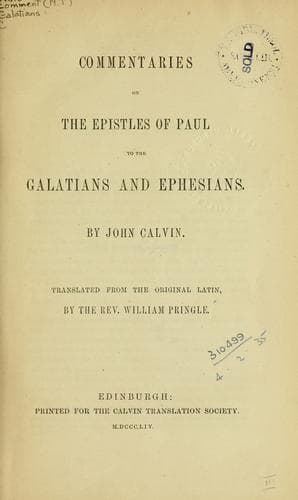
Commentaries on the Epistles of Paul
تعليقات على رسائل بولس
Commentaires sur les Épîtres de Paul
Editorial summary
John Calvin's Commentaries on the Epistles of Paul stands as one of the foundational texts of Reformed theology, offering systematic exegetical analysis that profoundly shapes Protestant understanding of divine sovereignty, human nature, and salvation. Written during Calvin's Strasbourg period and continued throughout his Geneva ministry, these commentaries demonstrate the reformer's commitment to sola scriptura while engaging critically with patristic sources, medieval scholasticism, and contemporary humanist scholarship.
Calvin's hermeneutical approach combines rigorous philological analysis with theological systematization, treating Paul's epistles as coherent expressions of divine revelation that demand both grammatical precision and spiritual insight. His commentary method reflects humanist training in rhetoric and classical languages while subordinating these tools to theological purposes. Against Catholic interpreters who emphasize ecclesial tradition and Anabaptist spiritualists who privilege immediate revelation, Calvin insists that God speaks definitively through the biblical text when properly interpreted according to the analogy of faith.
The work's theological significance centers on its articulation of divine sovereignty in salvation. Calvin's reading of Romans and Ephesians crystallizes the doctrine of unconditional election, arguing that God's choice precedes and determines human faith rather than responding to it. This interpretation challenges both medieval semi-Pelagianism and emerging Arminian tendencies by grounding salvation entirely in divine initiative. His exegesis of Pauline anthropology emphasizes total depravity, maintaining that the imago Dei, while not destroyed, is so corrupted that humans possess no natural capacity for genuine knowledge of God without regeneration.
Calvin's treatment of divine attributes emerges through careful attention to Pauline doxologies and theological assertions. He develops a nuanced account of God's simplicity, eternality, and immutability while emphasizing divine accommodation in revelation. His comments on christological passages in Philippians and Colossians defend Christ's full divinity against anti-Trinitarian readings while maintaining the integrity of Christ's human nature against docetic interpretations.
These commentaries establish enduring parameters for Reformed biblical interpretation and systematic theology. Calvin's integration of exegetical rigor with dogmatic coherence provides a model for subsequent Protestant theology, while his emphasis on divine sovereignty continues to generate debate about human freedom, theodicy, and the scope of redemption. The work remains essential for understanding how Protestant theology grounds its doctrine of God in apostolic testimony while engaging perennial philosophical questions about divine nature and action.
Argument formulations engaged
Calvin, John (1540). Commentaries on the Epistles of Paul. SBL Press.
@book{commentaries-on-the-epistles-of-paul-154,
  author    = {Calvin, John},
  title     = {Commentaries on the Epistles of Paul},
  year      = {1540},
  publisher = {SBL Press},
  url       = {https://god-database.com/en/works/commentaries-on-the-epistles-of-paul-1540}
}