
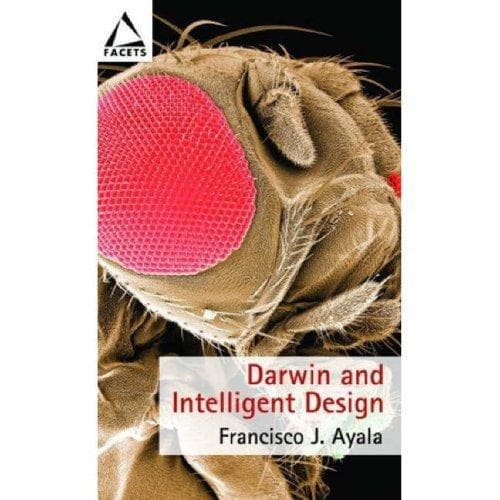
Darwin and Intelligent Design
داروين والتصميم الذكي
Darwin et le dessein intelligent
Editorial summary
Francisco Ayala's "Darwin and Intelligent Design" examines the relationship between evolutionary theory and religious belief, arguing that Darwin's scientific framework liberates theology from the problem of evil while decisively refuting intelligent design theory. The work represents a significant intervention in contemporary debates about science and religion, particularly in the American context where intelligent design proponents have sought to challenge evolutionary biology in educational and legal settings.
Ayala, a prominent evolutionary biologist and former Dominican priest, employs a dual methodological approach combining scientific analysis with theological reflection. He demonstrates that evolutionary mechanisms provide comprehensive explanations for biological complexity without requiring divine intervention, while simultaneously arguing that this scientific understanding need not conflict with religious faith. The monograph systematically addresses claims made by intelligent design advocates, particularly those associated with the Discovery Institute, showing how their arguments fail to meet basic scientific standards and misrepresent both evolutionary theory and theological traditions.
Central to Ayala's argument is the theodicy problem that has plagued natural theology since before Darwin. He contends that evolutionary theory actually resolves a major theological difficulty by explaining apparent design flaws, suffering, and cruelty in nature through natural processes rather than direct divine action. This perspective challenges both fundamentalist readings of scripture and sophisticated design arguments, suggesting that believers should welcome rather than resist evolutionary explanations. Ayala draws on his extensive background in genetics and molecular evolution to illustrate how complex biological systems arise through natural selection, genetic drift, and other evolutionary mechanisms.
The work engages critically with contemporary intelligent design theorists including Michael Behe, William Dembski, and Phillip Johnson, demonstrating how their concepts of "irreducible complexity" and "specified complexity" fail under scientific scrutiny. Ayala situates these debates within the broader history of natural theology, showing how intelligent design represents a regression from more sophisticated theological positions developed in response to Darwin. He argues that accepting evolutionary biology allows for a more coherent integration of scientific knowledge with religious belief than either biblical literalism or intelligent design theory permits.
This monograph contributes significantly to science and religion discourse by offering a scientifically informed yet theologically sensitive analysis. Ayala's unique position as both a leading evolutionary biologist and someone trained in theology enables him to navigate between scientific materialism and religious fundamentalism, proposing a synthesis that respects both empirical evidence and religious experience while maintaining clear boundaries between scientific and theological domains of inquiry.
Argument formulations engaged
Related works
Ayala, Francisco (2006). Darwin and Intelligent Design.
@book{darwin-and-intelligent-design-2006,
  author    = {Ayala, Francisco},
  title     = {Darwin and Intelligent Design},
  year      = {2006},
  url       = {https://god-database.com/en/works/darwin-and-intelligent-design-2006}
}