
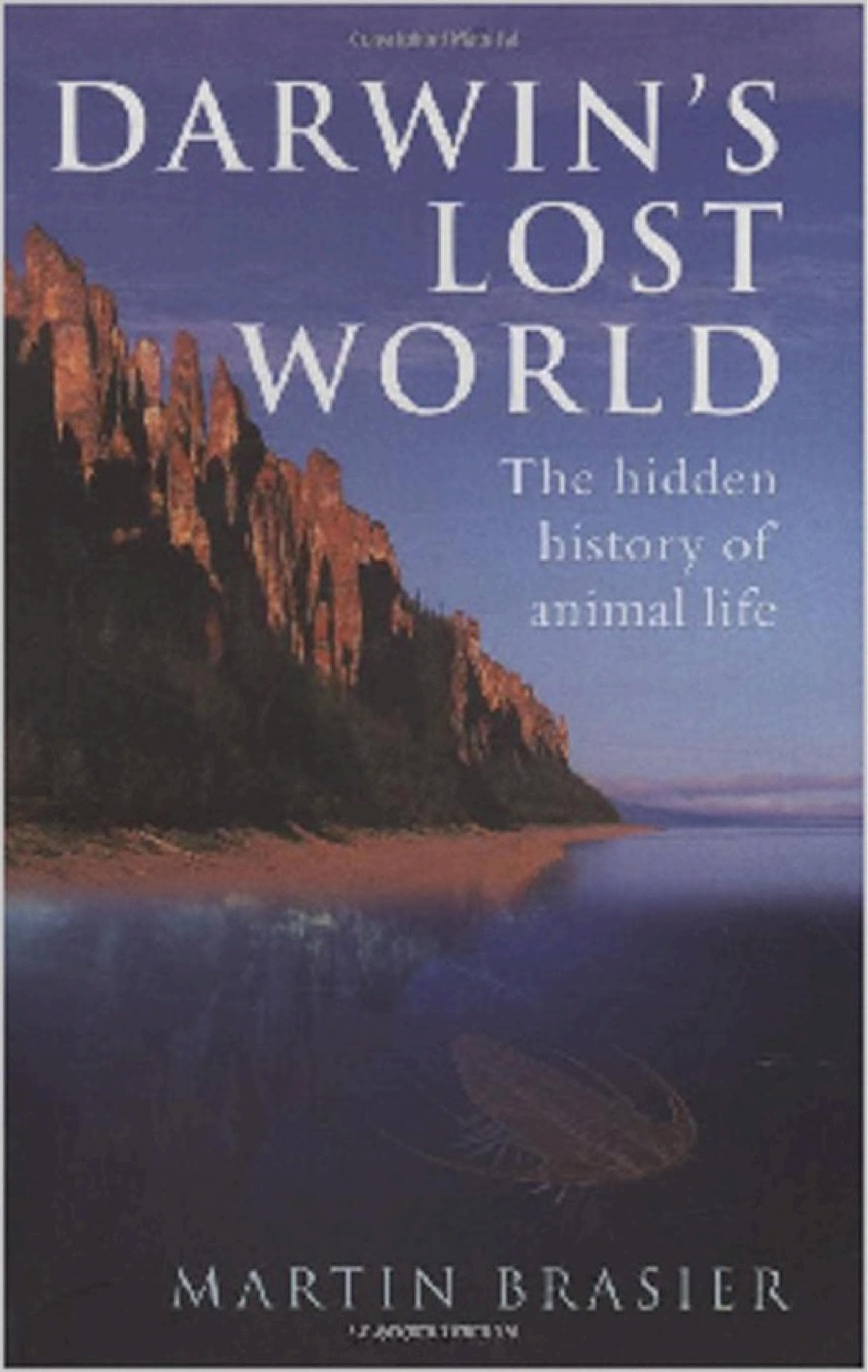
Darwin's Lost World.. The Hidden History of Animal Life
عالم داروين المفقود.. التاريخ الخفي للحياة الحيوانية
Le monde perdu de Darwin.. L'histoire cachée de la vie animale
The Precambrian fossil record, long treated as a blank page in the history of life, conceals a deep and complex evolutionary prehistory that reshapes our understanding of how animal life emerged on Earth.
Editorial summary
This work examines the pre-Cambrian fossil record and its implications for understanding the emergence of complex animal life, addressing longstanding puzzles in evolutionary biology that have historically intersected with design arguments. Brasier investigates the apparent "explosion" of animal forms during the Cambrian period, a phenomenon that has long posed challenges to gradualist evolutionary narratives and has been invoked by proponents of design arguments as evidence for directed creation.
The author employs a philosophy of science methodology to analyze how interpretations of the fossil record have evolved alongside improvements in paleontological techniques and theoretical frameworks. Brasier traces the historical development of scientific understanding regarding pre-Cambrian life forms, demonstrating how earlier gaps in the fossil record that seemed to support instantaneous creation have progressively yielded to evidence of precursor organisms. This historical analysis reveals how apparent discontinuities in the evolutionary record often reflect limitations in preservation and detection rather than actual absence of transitional forms.
Central to Brasier's argument is the examination of how scientific methodology shapes our understanding of life's early history. He explores the interpretive challenges posed by microscopic fossils and chemical signatures, showing how advances in technology have revealed previously "lost worlds" of early life. The work engages with design arguments indirectly but substantively, addressing claims that the Cambrian explosion represents an insurmountable challenge to naturalistic evolution. Brasier demonstrates how patient scientific investigation has gradually filled apparent gaps that once seemed to require supernatural explanation.
The monograph's significance for the God debate lies in its methodological insights about how scientific knowledge develops and how premature conclusions about design can arise from incomplete evidence. Brasier illustrates how the "god of the gaps" approach to natural history becomes increasingly untenable as scientific methods improve. By focusing on the process of scientific discovery rather than engaging in direct theological argumentation, the work provides a case study in how naturalistic explanations can emerge for phenomena initially deemed inexplicable without divine intervention. This approach exemplifies how descriptive scientific work can have profound implications for design arguments without explicitly entering theological territory.
Structured analysis
Structure of the work
Argument formulations engaged
Brasier, Martin (2002). Darwin's Lost World.. The Hidden History of Animal Life.
@book{darwins-lost-world-the-hidden-history-of,
  author    = {Brasier, Martin},
  title     = {Darwin's Lost World.. The Hidden History of Animal Life},
  year      = {2002},
  url       = {https://god-database.com/en/works/darwins-lost-world-the-hidden-history-of-animal-life}
}