
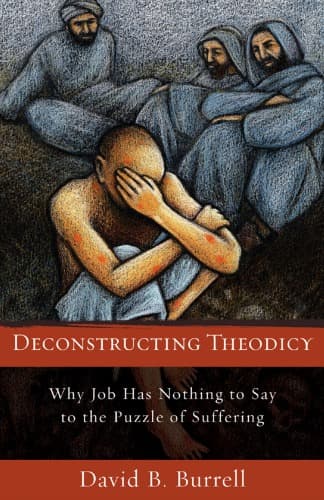
Deconstructing Theodicy: Why Job Has Nothing to Say to the Puzzle of Suffering
تفكيك علم الثيوديسيا: لماذا لا يقول أيوب شيئاً عن لغز المعاناة
Déconstruire la théodicée : Pourquoi Job n'a rien à dire à l'énigme de la souffrance
Editorial summary
This monograph challenges conventional philosophical approaches to theodicy by arguing that the Book of Job, rather than offering solutions to the problem of evil, actually deconstructs the entire enterprise of justifying God in the face of suffering. Burrell contends that Western philosophy has fundamentally misread Job by attempting to extract systematic answers from a text that deliberately resists such rationalization.
The work situates itself against a long tradition of theodicy stretching from Augustine through Leibniz to contemporary analytic philosophy of religion. Burrell argues that these approaches share a common error: they assume that human reason can comprehend divine justice within a logical framework that reconciles God's attributes with the existence of evil. This assumption, he maintains, reflects a characteristically modern confidence in rational systematization that the Job narrative explicitly undermines.
Burrell's methodology combines philosophical analysis with literary criticism, drawing on both Thomas Aquinas and postmodern thought, particularly Derrida's notion of deconstruction. He demonstrates how Job's friends represent precisely the kind of systematic theodicy that philosophers have pursued, while Job's protests and God's ultimate response from the whirlwind shatter these neat explanatory schemes. The divine speeches, rather than answering Job's questions, reframe the entire discussion by asserting a radical incommensurability between divine wisdom and human understanding.
The monograph makes a significant contribution by exposing what Burrell sees as a category mistake in traditional theodicy. He argues that suffering cannot be rationalized within a cost-benefit analysis or justified through greater-good arguments. Instead, the Job narrative points toward a different response to suffering—one based on faith and relationship rather than explanation. This move aligns with broader trends in continental philosophy of religion that emphasize the limits of rational theology.
Burrell's work proves particularly relevant to contemporary debates between analytic and continental approaches to philosophy of religion. While analytic philosophers continue to refine logical arguments about the problem of evil, Burrell suggests that such projects fundamentally misunderstand the nature of religious faith. His reading of Job implies that authentic religious response to suffering requires abandoning the very desire for theodicy—a provocative claim that challenges both philosophical and popular religious attempts to explain why bad things happen to good people.
Argument formulations engaged
Related works
Burrell, David B. (2008). Deconstructing Theodicy: Why Job Has Nothing to Say to the Puzzle of Suffering. Brazos Press.
@book{deconstructing-theodicy-why-job-has-noth,
  author    = {Burrell, David B.},
  title     = {Deconstructing Theodicy: Why Job Has Nothing to Say to the Puzzle of Suffering},
  year      = {2008},
  publisher = {Brazos Press},
  url       = {https://god-database.com/en/works/deconstructing-theodicy-why-job-has-nothing-to-say-to-the-puzzle-of-suffering-2008}
}