
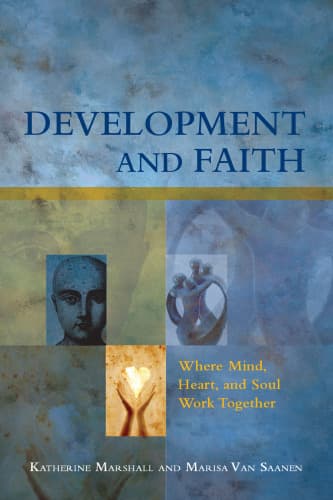
Development and Faith.. Where Mind, Heart and Soul Work Together
التنمية والإيمان.. حيث يعمل العقل والقلب والروح معاً
Développement et foi.. Là où l'esprit, le cœur et l'âme travaillent ensemble
Genuine human development requires the integration of rational, emotional, and spiritual dimensions, and faith in a personal God is not an obstacle to but a foundation for sustainable progress.
Editorial summary
This monograph examines the intersection of development practice and religious faith, arguing for a holistic integration of spiritual and material dimensions in international development work. Marshall, drawing from extensive field experience and case studies, contends that development initiatives achieve greater effectiveness when they acknowledge and incorporate the religious worldviews of communities they serve. The work challenges the prevailing secular paradigm in development studies, which has traditionally marginalized religious considerations as obstacles to modernization.
The author employs a descriptive-analytical methodology, documenting numerous development projects across diverse religious contexts in Africa, Asia, and Latin America. Through this empirical foundation, Marshall demonstrates how faith-based organizations often succeed where secular agencies fail, precisely because they engage with the spiritual frameworks that shape local understanding of wellbeing, justice, and human flourishing. The analysis reveals that communities frequently conceptualize poverty and development through religious lenses, making spiritual dimensions inseparable from material progress.
Marshall's cumulative case argument builds systematically, presenting evidence that development practitioners who dismiss religious worldviews miss crucial motivational and organizational resources within communities. The work particularly emphasizes how religious institutions provide social capital, ethical frameworks, and sustainable networks that secular development models struggle to replicate. Rather than viewing faith as mere cultural background, Marshall positions it as an active force in shaping development outcomes.
The monograph engages critically with secularization theorists who predicted religion's declining relevance in modernizing societies. Against these assumptions, Marshall documents religion's persistent and often growing influence in developing nations. The work also challenges faith communities themselves, arguing they must move beyond charity models toward systematic engagement with structural injustice and sustainable development practices.
This contribution matters significantly to the God debate by demonstrating religion's practical efficacy in addressing contemporary global challenges. While not offering traditional philosophical arguments for theism, Marshall's work provides empirical evidence for faith's constructive social role, countering narratives that frame religion primarily as divisive or regressive. The monograph suggests that acknowledging transcendent dimensions of human experience enhances rather than impedes progress toward material wellbeing. By documenting successful integration of spiritual and developmental goals, Marshall offers a pragmatic argument for taking religious worldviews seriously in public discourse and policy formation.
Structured analysis
Argument formulations engaged
Marshall, Catherine (2007). Development and Faith.. Where Mind, Heart and Soul Work Together. World Bank Publications.
@book{development-and-faith-where-mind-heart-a,
  author    = {Marshall, Catherine},
  title     = {Development and Faith.. Where Mind, Heart and Soul Work Together},
  year      = {2007},
  publisher = {World Bank Publications},
  url       = {https://god-database.com/en/works/development-and-faith-where-mind-heart-and-soul-work-together}
}