
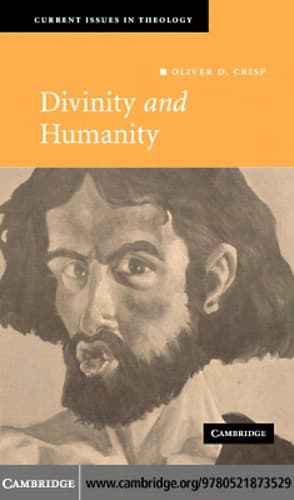
Divinity and Humanity: The Incarnation Reconsidered
الألوهية والإنسانية: إعادة النظر في التجسد
Divinité et humanité : L'incarnation reconsidérée
Editorial summary
This monograph presents a rigorous philosophical defense of the doctrine of the Incarnation within the framework of Reformed theology. Crisp engages with both historical and contemporary challenges to the coherent formulation of Christ as fully divine and fully human, offering what he terms a "compositional" account of the hypostatic union.
The work systematically addresses three primary philosophical objections to orthodox Christology. First, Crisp examines the logical problem of how one person can possess two complete natures without contradiction. Drawing on recent developments in analytic philosophy of mind, he argues that the divine Logos assumes human nature without being identical to it, employing a sophisticated distinction between person and nature that avoids both Nestorianism and monophysitism. Second, he confronts the problem of divine immutability, contending that the Incarnation involves no change in the divine nature itself but rather the assumption of a human nature into personal union with the unchanging Logos. Third, he addresses concerns about Christ's omniscience and human limitations, proposing a modified kenotic approach that maintains divine attributes while allowing for genuine human experience.
Crisp's methodology combines careful exegesis of classical Reformed sources, particularly John Owen and Francis Turretin, with contemporary analytic philosophical tools. He explicitly positions his work against both liberal theologians who deny the metaphysical claims of the Incarnation and conservative scholars who resist philosophical analysis of doctrine. His engagement with Thomas Morris and Richard Swinburne demonstrates both appreciation for their philosophical contributions and disagreement with their specific formulations.
The monograph's significance lies in its demonstration that orthodox Christology can withstand rigorous philosophical scrutiny without abandoning traditional commitments. Crisp shows that apparent contradictions in the doctrine often result from imprecise formulations rather than inherent incoherence. His work contributes to the God debate by defending the rationality of a central theistic claim while acknowledging the mystery that remains. The text serves as both a response to critics who charge Christianity with logical inconsistency and a corrective to defenders who eschew philosophical reflection. By providing a philosophically sophisticated account that remains faithful to Reformed orthodoxy, Crisp advances the contemporary discussion of divine-human relationship and the coherence of Christian theism.
Related works
Crisp, Oliver (2007). Divinity and Humanity: The Incarnation Reconsidered.
@book{divinity-and-humanity-the-incarnation-re,
  author    = {Crisp, Oliver},
  title     = {Divinity and Humanity: The Incarnation Reconsidered},
  year      = {2007},
  url       = {https://god-database.com/en/works/divinity-and-humanity-the-incarnation-reconsidered-2007}
}