
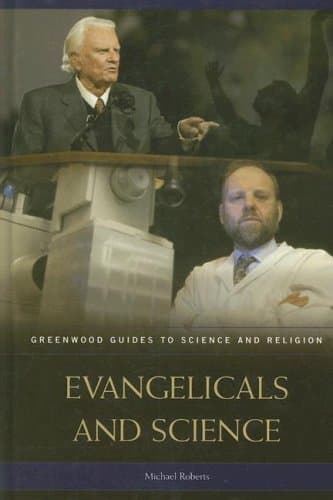
Evangelicals and Science
الإنجيليون والعلم
Les évangéliques et la science
Evangelical Christianity and modern science have a complex, historically entangled relationship that cannot be reduced to simple conflict or harmony.
Editorial summary
This monograph examines the complex relationship between evangelical Christianity and scientific inquiry from the 17th century to the present, challenging popular misconceptions about inherent conflict between evangelical faith and scientific practice. Roberts employs intellectual history methodology to trace how evangelicals have engaged with natural philosophy and modern science across four centuries, demonstrating that the relationship has been far more nuanced and productive than contemporary debates often suggest.
The work directly confronts the widespread assumption that evangelical Christianity necessarily opposes scientific advancement. Roberts systematically documents how numerous evangelicals have contributed to scientific disciplines while maintaining orthodox theological commitments. He analyzes key historical periods, including the Scientific Revolution, the Enlightenment, the Victorian era, and contemporary times, showing how evangelical responses to scientific developments have varied considerably based on theological, social, and cultural contexts.
Central to Roberts' argument is his distinction between different evangelical approaches to scripture and nature. He demonstrates how many evangelicals have historically embraced what he terms "complementary" views, seeing scientific investigation as compatible with biblical faith when properly understood. The monograph particularly emphasizes how 19th-century evangelicals engaged constructively with geology and early evolutionary theory, contrary to popular narratives of universal rejection. Roberts carefully documents how opposition to certain scientific theories often emerged from specific interpretative traditions rather than from evangelical theology per se.
The author situates his analysis within broader historiographical debates about religion and science, engaging with the "conflict thesis" popularized by John William Draper and Andrew Dickson White. Roberts provides substantial evidence that this thesis oversimplifies historical realities, showing how evangelical scientists, clergy, and educators frequently promoted scientific education and research. His work draws on extensive primary sources, including correspondence, sermons, scientific publications, and institutional records.
Roberts' contribution to the God debate lies in his demonstration that evangelical Christianity has produced diverse responses to scientific claims about divine action, creation, and providence. Rather than presenting evangelicalism as monolithically anti-scientific, he reveals a tradition capable of sophisticated engagement with empirical investigation. This historical perspective offers important context for contemporary discussions about science and religion, suggesting that perceived conflicts often reflect contingent historical developments rather than necessary theological positions. The monograph thus provides crucial historical grounding for understanding current evangelical positions on scientific issues.
Structured analysis
Argument formulations engaged
Roberts, Michael (2008). Evangelicals and Science. Greenwood.
@book{evangelicals-and-science,
  author    = {Roberts, Michael},
  title     = {Evangelicals and Science},
  year      = {2008},
  publisher = {Greenwood},
  url       = {https://god-database.com/en/works/evangelicals-and-science}
}