
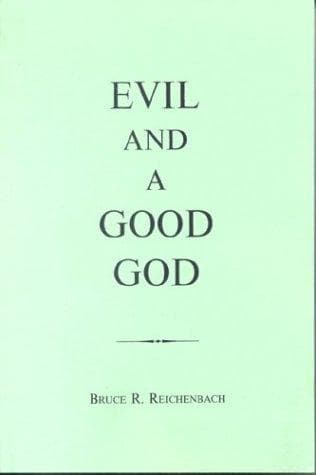
Evil and a Good God
الشر والإله الخيّر
Le mal et un Dieu bon
Editorial summary
Reichenbach's monograph addresses one of philosophy's most enduring challenges: reconciling the existence of evil with belief in an omnipotent, omniscient, and wholly good God. Writing in the tradition of analytical philosophy of religion, Reichenbach develops a comprehensive theodicy that engages directly with the logical problem of evil as formulated by contemporary critics of theism.
The work begins by examining the logical structure of the problem of evil, particularly as articulated by philosophers such as J.L. Mackie and others who argue that the coexistence of God and evil is logically contradictory. Reichenbach carefully analyzes the premises underlying this argument, distinguishing between the logical and evidential versions of the problem. He contends that while the logical problem can be resolved, the evidential problem requires a more nuanced theological response.
Central to Reichenbach's theodicy is an elaborate defense of the free will defense, drawing on and extending Alvin Plantinga's influential work. He argues that genuine moral freedom necessarily entails the possibility of choosing evil, and that a world containing free creatures who sometimes choose wrongly is better than a world of automata programmed only for good. Reichenbach addresses standard objections to this defense, including questions about natural evil and the apparent gratuity of certain sufferings.
The monograph also explores the concept of a "best possible world," engaging with Leibnizian optimism while offering a more modest proposal. Reichenbach argues that God need not create the best possible world (if such exists) but rather a world that achieves certain divine purposes, including the development of moral character and genuine relationships between free beings. He examines how various types of evil might serve these purposes without compromising divine goodness.
Throughout, Reichenbach employs the tools of modal logic and possible worlds semantics, characteristic of analytic philosophy in this period. His work represents a significant contribution to the revival of philosophical theology in the late twentieth century, offering sophisticated responses to the most pressing objections against theistic belief. By providing a systematic defense of traditional theodicy using contemporary philosophical methods, Reichenbach's monograph remains an important text for understanding how analytical philosophers have sought to defend the rationality of belief in God despite the reality of evil.
Argument formulations engaged
Related works
Reichenbach, Bruce (1982). Evil and a Good God. Fordham University Press.
@book{evil-and-a-good-god-1982,
  author    = {Reichenbach, Bruce},
  title     = {Evil and a Good God},
  year      = {1982},
  publisher = {Fordham University Press},
  url       = {https://god-database.com/en/works/evil-and-a-good-god-1982}
}