
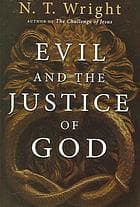
Evil and the Justice of God
الشر وعدالة الله
Le mal et la justice de Dieu
Editorial summary
Wright's Evil and the Justice of God confronts one of philosophy's most enduring challenges: how to reconcile belief in a good and omnipotent God with the undeniable reality of evil and suffering. Rather than offering abstract philosophical solutions, Wright develops a distinctively biblical-theological response that grounds the problem of evil within the narrative arc of scripture and the person of Jesus Christ.
The work critiques both traditional theodicies and contemporary attempts to minimize evil's reality. Wright argues that philosophical approaches, whether Augustinian privation theory or Leibnizian best-possible-world arguments, fail to engage adequately with evil's concrete manifestations. Similarly, he rejects modern tendencies to psychologize evil away or reduce it to social dysfunction. Instead, Wright insists that evil must be acknowledged as a genuine, destructive force that opposes God's good creation.
Wright's constructive proposal centers on what he terms the "cruciform solution." The cross represents not God's detachment from suffering but divine engagement with evil at its worst. Through Jesus's death and resurrection, God absorbs evil's full force while simultaneously defeating it. This approach shifts the discussion from theoretical justification to practical response. The question becomes not "Why does God permit evil?" but "What has God done about evil, and what is our role in that action?"
The monograph develops this framework through careful exegesis of biblical texts, particularly Job, the Psalms, and the Gospels. Wright demonstrates how scripture presents evil not as a philosophical puzzle requiring solution but as an enemy requiring defeat. This biblical narrative provides resources for lament, protest, and hope that purely philosophical theodicies cannot offer.
Wright's contribution lies in reframing the God-and-evil debate from abstract theorizing to concrete divine action. By focusing on the cross as God's definitive response to evil, he offers a theodicy that maintains both divine goodness and evil's seriousness. The work challenges both believers who minimize evil's reality and skeptics who see evil as disproving God's existence. Instead, Wright presents a God who enters into suffering to overcome it, providing a theological vision that addresses evil practically rather than merely explaining it theoretically.
Argument formulations engaged
Related works
Wright, N. T. (2006). Evil and the Justice of God. SPCK / IVP.
@book{evil-and-the-justice-of-god-2006,
  author    = {Wright, N. T.},
  title     = {Evil and the Justice of God},
  year      = {2006},
  publisher = {SPCK / IVP},
  url       = {https://god-database.com/en/works/evil-and-the-justice-of-god-2006}
}