
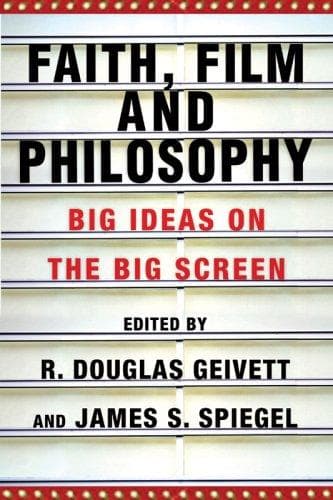
Faith, Film and Philosophy: Big Ideas on the Big Screen
الإيمان والسينما والفلسفة: أفكار كبيرة على الشاشة الكبيرة
Foi, cinéma et philosophie : Grandes idées sur grand écran
Editorial summary
This edited volume examines the intersection of philosophical inquiry and cinematic narrative, demonstrating how popular films serve as vehicles for exploring fundamental questions about God, morality, and human existence. R. Douglas Geivett assembles contributions from philosophers and theologians who analyze contemporary films as philosophical texts, arguing that cinema provides an accessible medium for engaging audiences with perennial metaphysical and ethical questions traditionally confined to academic discourse.
The collection's central premise holds that film possesses unique pedagogical power for philosophical reflection, particularly regarding theistic belief and religious experience. Contributors analyze various films—from The Matrix to The Truman Show—not merely as entertainment but as thought experiments that dramatize classical philosophical problems. The volume contends that visual storytelling can illuminate abstract concepts about divine existence, free will, and moral responsibility in ways that purely theoretical discussions cannot achieve.
Geivett's approach represents a departure from traditional philosophy of religion by embracing popular culture as a legitimate domain for theological reflection. The work challenges the academy's tendency to isolate philosophical discourse from contemporary cultural expressions, arguing instead that films reflect and shape society's evolving relationship with religious questions. Each chapter demonstrates how specific films embody philosophical arguments, whether explicitly religious or implicitly metaphysical, making complex ideas accessible to broader audiences.
The collection engages with both theistic and naturalistic perspectives, though its overall orientation favors exploring how films can support or challenge religious worldviews. Contributors examine how cinematic narratives address theodicy, divine hiddenness, religious pluralism, and the rationality of faith. The work positions itself against purely secular readings of popular culture, arguing that many ostensibly secular films contain profound theological dimensions that merit serious philosophical attention.
This volume matters to the God debate because it recognizes that contemporary discussions about divine existence increasingly occur outside traditional religious or academic contexts. By analyzing how films present and problematize religious themes, the collection illuminates how modern culture grapples with transcendent questions. The work suggests that philosophy of religion must expand its methodological toolkit to include cultural criticism, acknowledging that beliefs about God are formed and reformed through narrative and image as much as through formal argument. This interdisciplinary approach opens new avenues for understanding how contemporary societies negotiate questions of ultimate meaning and divine presence.
Argument formulations engaged
Geivett, R. Douglas (2007). Faith, Film and Philosophy: Big Ideas on the Big Screen. InterVarsity Press.
@book{faith-film-and-philosophy-big-ideas-on-t,
  author    = {Geivett, R. Douglas},
  title     = {Faith, Film and Philosophy: Big Ideas on the Big Screen},
  year      = {2007},
  publisher = {InterVarsity Press},
  url       = {https://god-database.com/en/works/faith-film-and-philosophy-big-ideas-on-the-big-screen-2007}
}