
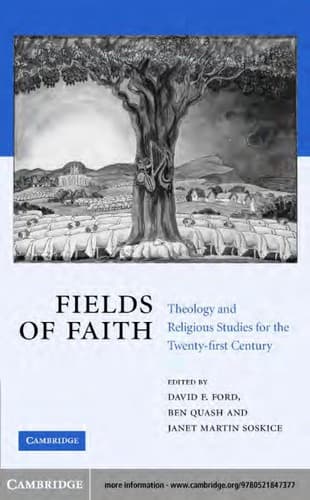
Fields of Faith
حقول الإيمان
Les champs de la foi
Sustained engagement across the Abrahamic faiths and with secular modernity can yield a richer, more responsible theology that neither retreats into confessionalism nor dissolves into relativism.
Editorial summary
Ford's Fields of Faith presents a sophisticated theological exploration of how contemporary religious traditions can engage constructively with modern pluralism while maintaining their distinctive truth claims and practices. The work develops a theological framework for interfaith dialogue that neither reduces religious differences to superficial variations nor abandons substantive engagement with questions of truth and ultimate reality.
Central to Ford's argument is the concept of "scriptural reasoning," a practice whereby adherents of different Abrahamic traditions read their sacred texts together without bracketing their theological commitments. This methodology challenges both exclusivist approaches that deny validity to other traditions and inclusivist strategies that subsume religious differences under universal categories. Ford argues that authentic interfaith engagement requires participants to bring their full theological resources to bear while remaining genuinely open to wisdom from other traditions.
The work engages critically with modern prophecy arguments by examining how religious traditions can speak prophetically in pluralistic contexts. Ford contends that prophetic witness need not entail dismissal of other voices but can emerge through deep interfaith engagement that sharpens each tradition's understanding of its own resources and responsibilities. He develops this through careful analysis of how Jewish, Christian, and Islamic traditions have historically interpreted their prophetic callings in relation to one another.
Ford's theological method combines systematic reflection with practical wisdom drawn from actual interfaith encounters. He argues against both secular frameworks that privatize religious conviction and fundamentalist approaches that refuse genuine dialogue. Instead, he proposes a model of "hospitable theology" that maintains robust truth claims while creating space for transformative encounter with religious others.
The work makes a significant contribution to contemporary debates about religious pluralism and the question of God by demonstrating how theological conviction and dialogical openness need not be opposing forces. Ford shows how the reality of God can be explored through interfaith engagement without reducing theology to comparative religion or abandoning normative claims. His approach offers resources for those seeking to navigate between relativism and absolutism in addressing ultimate questions.
Fields of Faith stands as an important intervention in discussions about how religious traditions can maintain their witness to transcendent reality while engaging constructively with religious diversity in late modernity.
Structured analysis
Structure of the work
Argument formulations engaged
Ford, David (2005). Fields of Faith. Cambridge University Press.
@book{fields-of-faith,
  author    = {Ford, David},
  title     = {Fields of Faith},
  year      = {2005},
  publisher = {Cambridge University Press},
  url       = {https://god-database.com/en/works/fields-of-faith}
}