
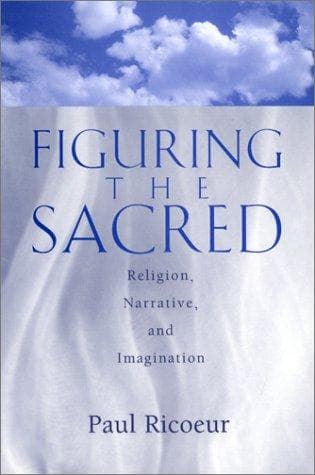
Figuring the Sacred
فهم المقدس
Figurer le sacré
Editorial summary
This collection of essays, subtitled "Religion, Narrative, and Imagination," demonstrates Paul Ricoeur's sustained engagement with religious discourse through the lens of hermeneutical philosophy. The volume synthesizes decades of Ricoeur's reflections on biblical interpretation, religious symbolism, and the relationship between philosophical and theological thinking. Rather than defending or attacking theistic belief directly, Ricoeur develops a sophisticated framework for understanding how religious language functions and why it remains philosophically significant.
Central to the collection is Ricoeur's concept of the "hermeneutics of testimony," which examines how religious texts make truth claims through narrative and symbolic forms rather than through propositional statements. He argues that biblical narratives operate according to their own logic of meaning-production, one that cannot be reduced to either literal historical claims or mere literary fiction. This approach allows Ricoeur to navigate between fundamentalist literalism and reductive secularism, proposing instead that religious texts open up new possibilities for self-understanding and ethical orientation.
The essays engage critically with both theological and philosophical traditions. Ricoeur draws extensively on Kant's moral philosophy while challenging its limitations regarding religious hope. He incorporates insights from Heidegger and Gadamer while resisting their more radical hermeneutical positions. Against demythologizing theologians like Bultmann, Ricoeur maintains that religious symbols and narratives possess irreducible meaning that cannot be translated into abstract concepts without loss. Conversely, against neo-orthodox positions, he insists that religious discourse must remain open to philosophical critique and cannot claim immunity from rational examination.
Ricoeur's method combines phenomenological description with hermeneutical interpretation, treating religious phenomena as meaningful human expressions worthy of serious philosophical attention. He examines specific biblical texts, particularly from the Hebrew Bible, to demonstrate how narrative imagination shapes religious understanding. The collection includes important essays on evil, forgiveness, and love, showing how religious categories illuminate fundamental human experiences that purely secular philosophy struggles to address adequately.
The work's significance lies in its sophisticated mediation between faith and reason, offering resources for believers seeking philosophical depth and for philosophers interested in religious questions. Ricoeur neither reduces religion to philosophy nor isolates it from critical thought, instead demonstrating how religious texts and traditions contribute to broader humanistic understanding. His approach has influenced contemporary discussions in philosophy of religion, biblical studies, and theological hermeneutics.
Argument formulations engaged
Ricoeur, Paul (1995). Figuring the Sacred. Fortress Press.
@book{figuring-the-sacred-1995,
  author    = {Ricoeur, Paul},
  title     = {Figuring the Sacred},
  year      = {1995},
  publisher = {Fortress Press},
  url       = {https://god-database.com/en/works/figuring-the-sacred-1995}
}