
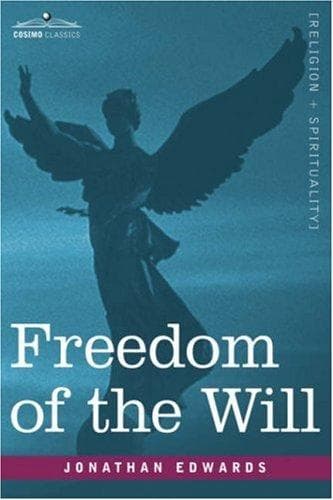
Freedom of the Will
حرية الإرادة
Liberté de la volonté
Editorial summary
Edwards' Freedom of the Will stands as perhaps the most formidable philosophical defense of theological determinism in the Reformed tradition. Writing against the rising tide of Arminian theology, particularly as articulated by Daniel Whitby and Thomas Chubb, Edwards constructs a rigorous argument that genuine human freedom is not only compatible with divine sovereignty but actually requires it. The work systematically dismantles the notion of libertarian free will while defending the coherence of moral responsibility within a deterministic framework.
The treatise proceeds through meticulous philosophical analysis, beginning with careful definitions of will, liberty, necessity, and contingency. Edwards argues that the will is simply the mind choosing, and that every choice is determined by what appears most agreeable to the mind at the moment of decision. He contends that the Arminian conception of liberty of indifference—the ability to choose contrary to one's strongest inclination—is both philosophically incoherent and practically impossible. Such a notion, Edwards demonstrates, would require either an infinite regress of choices or choices arising from nothing, both of which undermine genuine agency.
Central to Edwards' argument is his distinction between natural and moral necessity. While humans possess natural ability to perform various actions, they lack the moral ability to choose contrary to their dominant desires. This framework allows Edwards to maintain that sinners are truly responsible for their sins despite being morally unable to choose otherwise. The work draws heavily on Lockean empiricism and demonstrates sophisticated engagement with contemporary philosophical debates about causation, demonstrating that Reformed theology could meet Enlightenment philosophy on its own terms.
The theological implications are profound. Edwards argues that Arminian free will, if true, would make God's foreknowledge impossible and reduce providence to mere speculation. By showing that libertarian freedom is conceptually confused, he defends the Reformed doctrines of predestination and irresistible grace as both philosophically necessary and biblically warranted. The work's influence extends well beyond its immediate context, shaping subsequent debates about determinism and compatibilism in both theological and secular philosophical circles. Modern discussions of free will, particularly in Reformed theology and analytic philosophy of religion, still grapple with Edwards' arguments. His synthesis of rigorous philosophical analysis with unwavering theological commitment establishes a model for how classical theism can engage modern philosophical challenges without compromising core doctrinal commitments.
Argument formulations engaged
Related works
Edwards, Jonathan (1754). Freedom of the Will. Vandenhoeck & Ruprecht.
@book{freedom-of-the-will-1754,
  author    = {Edwards, Jonathan},
  title     = {Freedom of the Will},
  year      = {1754},
  publisher = {Vandenhoeck & Ruprecht},
  url       = {https://god-database.com/en/works/freedom-of-the-will-1754}
}