
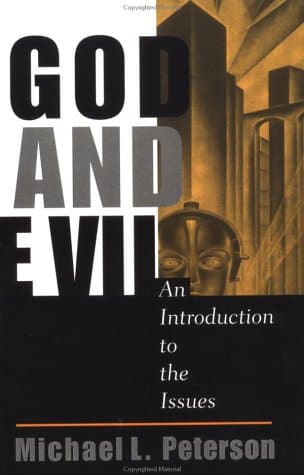
God and Evil: An Introduction to the Issues
الله والشر: مقدمة للقضايا
Dieu et le mal : Une introduction aux enjeux
Editorial summary
This monograph provides a systematic examination of the problem of evil as it relates to theistic belief, particularly within the Christian philosophical tradition. Peterson structures his analysis around the fundamental tension between the existence of an omnipotent, omniscient, and perfectly good God and the undeniable reality of evil and suffering in the world. The work serves as both an introduction to the philosophical issues and a defense of theistic responses to the problem of evil.
Peterson begins by carefully delineating the logical and evidential versions of the problem of evil. The logical problem, as formulated by philosophers like J.L. Mackie, claims that the existence of any evil is logically incompatible with the existence of God. The evidential problem, advanced by William Rowe and others, argues that the amount and types of evil we observe make God's existence improbable. Peterson examines these challenges in detail, presenting them in their strongest forms before analyzing theistic responses.
The author explores major theodicies and defenses that have emerged in response to these challenges. He discusses the free will defense, particularly as developed by Alvin Plantinga, which argues that genuine moral freedom necessarily entails the possibility of evil. Peterson also examines soul-making theodicies, drawing on John Hick's work, which suggest that suffering and moral challenges are necessary for spiritual development and the formation of virtuous character. Natural evil receives separate treatment, with Peterson considering various explanations including the regularity of natural laws and the interconnectedness of physical systems.
A distinctive feature of Peterson's approach is his attention to the existential and pastoral dimensions of evil, not merely its logical aspects. He argues that purely philosophical responses, while intellectually important, must be complemented by recognition of evil's profound impact on human experience and faith. The work engages critically with skeptical philosophers while also drawing on theological resources from Augustine, Aquinas, and contemporary Christian thinkers.
Peterson ultimately defends a qualified theistic position, arguing that while the problem of evil presents serious challenges, various theodicies and defenses collectively provide adequate resources for maintaining rational belief in God. He emphasizes that no single response resolves all aspects of the problem, but that taken together, theistic responses show that evil does not decisively count against God's existence. The monograph succeeds in making complex philosophical debates accessible while maintaining analytical rigor.
Argument formulations engaged
Related works
Peterson, Michael L. (1998). God and Evil: An Introduction to the Issues. Westview Press.
@book{god-and-evil-an-introduction-to-the-issu,
  author    = {Peterson, Michael L.},
  title     = {God and Evil: An Introduction to the Issues},
  year      = {1998},
  publisher = {Westview Press},
  url       = {https://god-database.com/en/works/god-and-evil-an-introduction-to-the-issues-1998}
}