
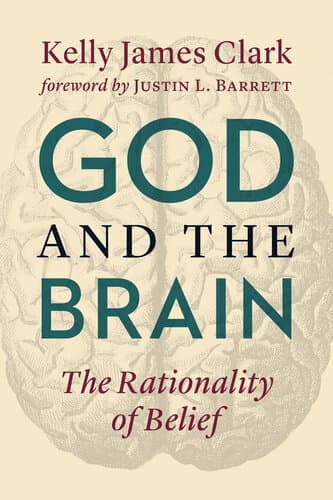
God and the Brain: The Rationality of Belief
الله والدماغ: عقلانية الإيمان
Dieu et le cerveau : La rationalité de la croyance
Editorial summary
This monograph examines the cognitive science of religious belief to defend the rationality of theistic faith against naturalistic challenges. Clark engages recent empirical research on the psychological and neurological bases of religious cognition, arguing that scientific findings about how humans form religious beliefs do not undermine their epistemic legitimacy. The work represents a significant contribution to the intersection of cognitive science and philosophy of religion, particularly in responding to debunking arguments that claim to explain away religious belief as mere evolutionary byproduct.
Clark's central thesis challenges the prevalent assumption that identifying the natural causes of religious belief demonstrates its irrationality or falsehood. He systematically addresses cognitive theories including Justin Barrett's hyperactive agency detection device, Pascal Boyer's minimally counterintuitive concepts, and various evolutionary accounts of religion's origins. Rather than denying these mechanisms, Clark argues that natural cognitive processes generating religious beliefs are generally reliable and truth-conducive, paralleling how humans form beliefs in other domains. He contends that evolutionary and cognitive explanations of belief formation are epistemically neutral regarding the truth of religious claims.
The work particularly targets debunking arguments advanced by atheist philosophers and cognitive scientists who interpret empirical findings as evidence against theism. Clark employs reformed epistemology's framework, drawing on Alvin Plantinga's proper functionalism, to argue that if human cognitive faculties evolved or were designed to produce true beliefs for survival, then naturally occurring religious beliefs warrant prima facie trust absent defeaters. He addresses specific challenges from Paul Bloom, Jesse Bering, and Daniel Dennett, demonstrating how their interpretations of cognitive science data rely on questionable philosophical assumptions about rationality and warrant.
Clark's methodology combines careful analysis of empirical studies with sophisticated epistemological argumentation. He distinguishes between proximate mechanisms producing religious beliefs and ultimate questions about their truth, showing how critics conflate genetic and justificatory issues. The monograph advances discussions in both analytic philosophy of religion and cognitive science of religion by providing a philosophically rigorous response to scientific challenges while taking empirical findings seriously.
This work matters because it offers theistic philosophers resources for engaging cognitive science constructively rather than defensively. Clark demonstrates how believers can acknowledge scientific accounts of religious cognition while maintaining that such beliefs remain rationally justified. His arguments have implications for broader questions about the relationship between natural and supernatural explanations, the epistemology of testimony, and the rationality of metaphysical beliefs formed through ordinary cognitive processes.
Argument formulations engaged
Clark, Kelly James (2019). God and the Brain: The Rationality of Belief. Eerdmans.
@book{god-and-the-brain-the-rationality-of-bel,
  author    = {Clark, Kelly James},
  title     = {God and the Brain: The Rationality of Belief},
  year      = {2019},
  publisher = {Eerdmans},
  url       = {https://god-database.com/en/works/god-and-the-brain-the-rationality-of-belief-2019}
}