
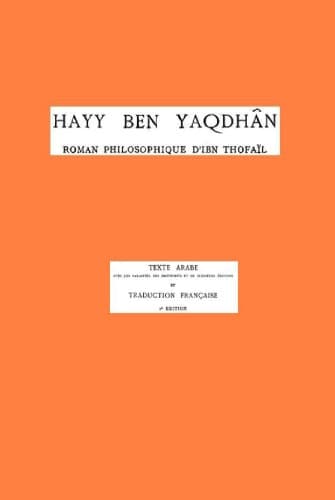
Hayy ibn Yaqdhan
حي بن يقظان
Editorial summary
Ibn Tufayl's philosophical novel Hayy ibn Yaqdhan presents a groundbreaking thought experiment that explores whether human reason alone can arrive at knowledge of God and religious truth. The work depicts a child who grows up in complete isolation on a desert island, developing from infancy to philosophical maturity without any human contact or cultural influence. Through systematic observation of nature and rigorous logical reasoning, Hayy independently discovers fundamental truths about the natural world, the soul, and ultimately the existence and nature of God.
The narrative serves as Ibn Tufayl's intervention in 12th-century debates about the relationship between philosophy and revealed religion. Writing in Almohad Spain during a period of intense philosophical activity, Ibn Tufayl positions his work against both strict traditionalists who reject philosophical inquiry and radical Aristotelians who subordinate revelation to reason. His protagonist's intellectual journey demonstrates that properly conducted rational inquiry leads to the same truths proclaimed by prophetic revelation, though expressed in different forms.
Ibn Tufayl's method combines Avicennian psychology with Ghazalian mysticism to construct a comprehensive epistemology. Hayy progresses through empirical observation of animals and natural phenomena to abstract reasoning about causation and necessity, eventually achieving direct mystical experience of the divine. This developmental sequence argues that human cognitive faculties, when properly cultivated, naturally ascend from sensory knowledge through demonstrative reasoning to intellectual intuition of God's existence and attributes.
The work's significance for the God debate lies in its sophisticated reconciliation of natural theology with revealed religion. Ibn Tufayl argues that reason and revelation represent parallel paths to identical truths, differing only in their modes of expression and accessibility. While philosophical demonstration remains available only to intellectual elites, prophetic revelation makes these same truths accessible to all humanity through symbolic and imaginative discourse. This position challenges both fideistic rejections of rational theology and rationalistic dismissals of revelation.
Ibn Tufayl's influence extends beyond Islamic philosophy, inspiring later European discussions about natural religion and the scope of reason. His optimistic assessment of human rational capacity to know God independently of revelation would provoke responses from thinkers who emphasize either the necessity of grace or the limitations of natural reason. The work remains a seminal contribution to debates about whether belief in God requires special revelation or can be established through natural human faculties alone.
Argument formulations engaged
Related works
Ibn Tufayl (1160). Hayy ibn Yaqdhan. Imprimerie Catholique.
@book{hayy-ibn-yaqdhan-1160,
  author    = {Ibn Tufayl},
  title     = {Hayy ibn Yaqdhan},
  year      = {1160},
  publisher = {Imprimerie Catholique},
  url       = {https://god-database.com/en/works/hayy-ibn-yaqdhan-1160}
}