
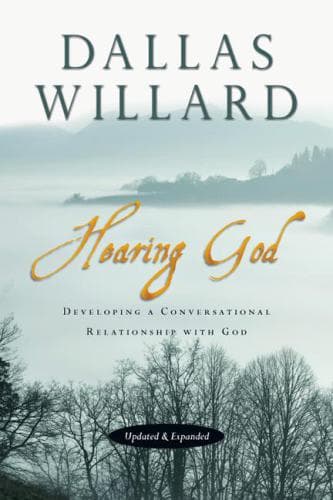
Hearing God: Developing a Conversational Relationship with God
سماع الله: تطوير علاقة حوارية مع الله
Entendre Dieu : Développer une relation conversationnelle avec Dieu
Editorial summary
Dallas Willard's "Hearing God: Developing a Conversational Relationship with God" presents a philosophical and practical examination of divine communication, arguing that contemporary believers can and should expect to hear from God as a normal aspect of Christian experience. Writing against both cessationist theology that limits divine communication to scripture alone and charismatic excesses that lack discernment, Willard develops a moderate position grounded in classical Christian spirituality and philosophical reflection on the nature of personal relationships.
The work's central thesis contends that if God is personal and desires relationship with human beings, then two-way communication must be possible and normative. Willard draws on biblical narratives, church history, and phenomenological analysis to demonstrate that throughout Christian tradition, believers have reported experiences of divine guidance that extend beyond general principles found in scripture. He argues that denying this possibility effectively reduces God to an absent watchmaker rather than the living, interactive deity presented in biblical texts.
Methodologically, Willard employs both philosophical argumentation and pastoral wisdom, examining the logical conditions necessary for genuine divine-human communication while providing practical guidelines for discernment. He addresses epistemological concerns about distinguishing genuine divine communication from psychological projection or deception, proposing criteria including consistency with scripture, the quality of the "voice" (described as warm, firm, and morally elevating), and confirmation through circumstances and community.
The monograph engages critically with Enlightenment rationalism that relegates religious experience to mere subjectivity, while also challenging fundamentalist approaches that limit God's communication to biblical texts. Willard's position represents a thoughtful integration of evangelical theology with contemplative tradition, drawing particularly on Quaker insights about the "inner light" and Catholic mystical theology.
His contribution to debates about divine action and religious epistemology lies in providing a philosophically sophisticated defense of ongoing divine communication that avoids both rationalistic reductionism and uncritical enthusiasm. The work's influence extends beyond academic theology into pastoral practice, shaping how many contemporary Christians understand prayer and spiritual discernment. By arguing that hearing God remains possible and essential for authentic Christian discipleship, Willard challenges both secular assumptions about divine absence and religious tendencies toward either biblical absolutism or experiential excess.
Argument formulations engaged
Willard, Dallas (1984). Hearing God: Developing a Conversational Relationship with God.
@book{hearing-god-developing-a-conversational-,
  author    = {Willard, Dallas},
  title     = {Hearing God: Developing a Conversational Relationship with God},
  year      = {1984},
  url       = {https://god-database.com/en/works/hearing-god-developing-a-conversational-relationship-with-god-1984}
}