
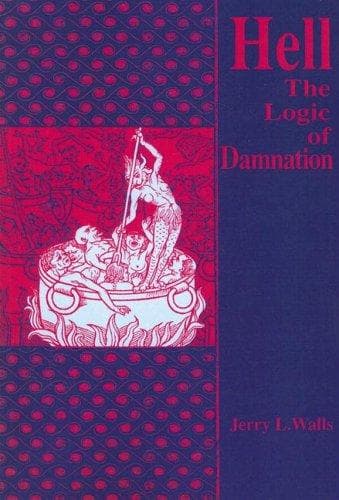
Hell: The Logic of Damnation
الجحيم: منطق اللعنة
Enfer : La logique de la damnation
Editorial summary
This monograph presents a philosophical defense of the traditional Christian doctrine of hell, engaging contemporary objections that such a doctrine contradicts divine goodness. Walls develops a coherent account of eternal damnation that attempts to reconcile God's perfect love with the possibility of everlasting punishment, positioning his work against both universalist theologians and secular critics who view hell as morally indefensible.
The work's central argument rests on a libertarian understanding of human freedom and its relationship to divine love. Walls contends that genuine love requires the possibility of rejection, and that God's respect for human autonomy entails allowing individuals to choose separation from divine goodness. He argues that hell represents not divine vindictiveness but the natural consequence of persistent rejection of God's grace. This framework draws heavily on C.S. Lewis's notion that "the doors of hell are locked from the inside," suggesting that damnation results from human choice rather than divine decree.
Walls addresses several key objections to the doctrine of hell through rigorous philosophical analysis. Against the charge that eternal punishment for temporal sins violates proportionality, he argues that the gravity of sin lies not in its temporal duration but in its object—the infinite God. He responds to universalist arguments by maintaining that forced salvation would violate human dignity and genuine relationship with God. The work also engages with the problem of how a loving God could create beings knowing some would choose damnation, employing elements of Plantinga's free will defense while extending the analysis to eschatological questions.
The monograph's significance lies in its systematic philosophical treatment of a doctrine often dismissed as primitive or incoherent in contemporary theology. Walls demonstrates that belief in hell can be rationally defended within a broader theistic framework that values human freedom and moral responsibility. His work contributes to debates about divine attributes, particularly the relationship between God's justice and mercy, while also addressing broader questions about the nature of moral agency and ultimate human destiny. The study exemplifies analytic philosophy of religion's engagement with traditional Christian doctrine, showing how classical theological positions can be reformulated to meet modern philosophical challenges. Walls's careful argumentation provides resources for theists defending traditional eschatology while illuminating the conceptual issues at stake in debates about universal salvation versus particular damnation.
Argument formulations engaged
Related works
Walls, Jerry L. (1992). Hell: The Logic of Damnation. University of Notre Dame Press.
@book{hell-the-logic-of-damnation-1992,
  author    = {Walls, Jerry L.},
  title     = {Hell: The Logic of Damnation},
  year      = {1992},
  publisher = {University of Notre Dame Press},
  url       = {https://god-database.com/en/works/hell-the-logic-of-damnation-1992}
}