
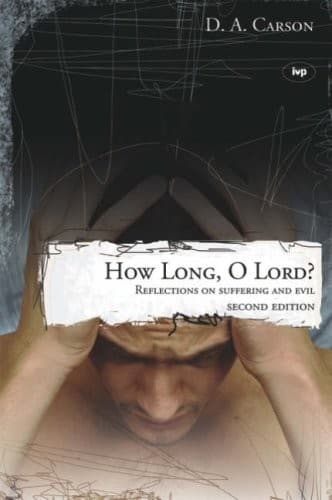
How Long, O Lord?
إلى متى يا رب؟
Jusques à quand, ô Seigneur ?
Editorial summary
This monograph examines the theological and pastoral dimensions of suffering within a Christian framework, addressing the perennial question of how believers should understand and respond to evil and pain in light of their faith in a sovereign and good God. Carson approaches this emotionally charged topic through careful exegesis of biblical texts while engaging with contemporary philosophical discussions about theodicy and the problem of evil.
The work systematically explores various biblical passages that address suffering, including Job, select Psalms, and New Testament texts, particularly focusing on how Scripture presents both divine sovereignty and human responsibility without resolving the tension into simplistic formulas. Carson argues against both extremes of denying God's control over suffering and of making God directly culpable for evil. Instead, he develops a nuanced position that maintains divine sovereignty while preserving meaningful human agency and moral responsibility.
A significant portion of the analysis critiques popular Christian responses to suffering that Carson finds biblically inadequate or pastorally harmful. He challenges prosperity theology, which promises freedom from suffering for the faithful, as well as open theism's limitation of divine foreknowledge as a solution to the problem of evil. The author also examines and rejects purely philosophical approaches that attempt to solve the problem of evil through logical argumentation alone, arguing that such approaches fail to address the existential dimensions of suffering.
Carson's theological method combines rigorous biblical exegesis with pastoral sensitivity, recognizing that abstract theological discussions must connect with lived human experience. He emphasizes that Scripture provides a framework for understanding suffering that acknowledges mystery while offering genuine comfort and hope. The work particularly highlights how the incarnation and crucifixion of Christ transform the Christian understanding of suffering, presenting a God who enters into human pain rather than remaining distant from it.
The monograph's contribution to discussions about God lies in its refusal to offer easy answers while maintaining that biblical theism provides resources for facing suffering meaningfully. Carson demonstrates how traditional Christian theology can engage honestly with the reality of evil without abandoning core convictions about God's character and purposes. This work serves as both an academic treatment of theodicy and a pastoral resource, showing how rigorous theological reflection can address profound human questions without sacrificing either intellectual integrity or spiritual depth.
Argument formulations engaged
Related works
Carson, D. A. (2006). How Long, O Lord?.
@book{how-long-o-lord-2006,
  author    = {Carson, D. A.},
  title     = {How Long, O Lord?},
  year      = {2006},
  url       = {https://god-database.com/en/works/how-long-o-lord-2006}
}