
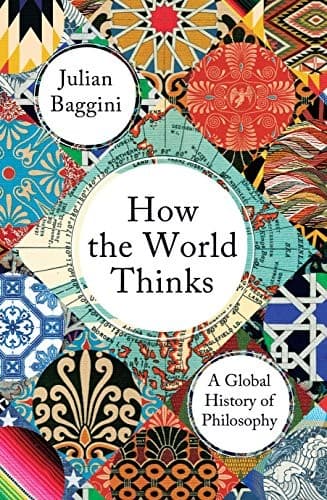
How the World Thinks: A Global History of Philosophy
كيف يفكر العالم: تاريخ عالمي للفلسفة
Comment le monde pense : Une histoire globale de la philosophie
Editorial summary
Julian Baggini's How the World Thinks examines diverse philosophical traditions across cultures to challenge Western-centric approaches to fundamental questions, including those concerning divinity and ultimate reality. The work presents a comparative analysis of how different civilizations have conceptualized the divine, religious experience, and the relationship between philosophy and theology.
Baggini employs an ethnophilosophical methodology, combining textual analysis with extensive fieldwork and interviews across multiple continents. He demonstrates how Islamic philosophy integrates rational inquiry with revealed truth, contrasting this with secular Western philosophy's tendency to separate reason from faith. The discussion of Hindu and Buddhist thought reveals non-theistic conceptions of ultimate reality that resist Western categories of theism and atheism. Chinese philosophical traditions receive particular attention for their pragmatic approach to questions that Western thought treats as metaphysical absolutes.
The monograph critiques Western philosophy's claim to universal validity, arguing that supposedly neutral rational inquiry often carries implicit theological assumptions inherited from Christianity. Baggini shows how African ubuntu philosophy and indigenous American worldviews offer relational ontologies that dissolve Western dichotomies between sacred and secular, individual and divine. His analysis reveals that what counts as a philosophical question about God varies dramatically across cultures.
Central to Baggini's argument is the claim that philosophy's relationship to religious questions is culturally determined rather than rationally necessary. He challenges both religious philosophers who claim universal spiritual truths and secular philosophers who dismiss non-Western thought as insufficiently rigorous. The work particularly engages with postcolonial critiques of philosophical imperialism while avoiding relativistic conclusions.
The book's significance for debates about God lies in its systematic demonstration that the very framing of theological questions reflects particular cultural histories. Baggini argues that genuine philosophical dialogue about divinity requires acknowledging these differences rather than assuming a shared conceptual framework. His work suggests that Western philosophy's confidence in adjudicating religious claims through pure reason may itself be a culturally specific prejudice. By mapping alternative philosophical landscapes, the monograph opens new possibilities for cross-cultural dialogue about ultimate questions while revealing the contingency of dominant Western approaches to the philosophy of religion.
Argument formulations engaged
Baggini, Julian (2018). How the World Thinks: A Global History of Philosophy. Granta.
@book{how-the-world-thinks-a-global-history-of,
  author    = {Baggini, Julian},
  title     = {How the World Thinks: A Global History of Philosophy},
  year      = {2018},
  publisher = {Granta},
  url       = {https://god-database.com/en/works/how-the-world-thinks-a-global-history-of-philosophy-2018}
}