
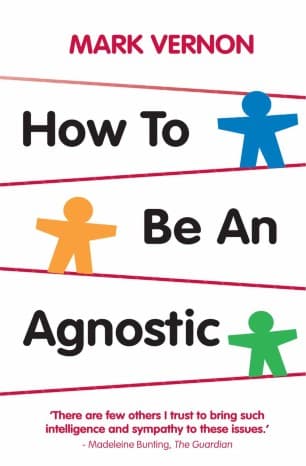
How to Be an Agnostic
كيف تكون لاأدرياً
Comment être agnostique
Agnosticism, properly understood, is not a weak fence-sitting position but a rigorous intellectual stance that takes seriously the limits of human knowledge about God and ultimate questions.
Editorial summary
Mark Vernon's How to Be an Agnostic presents a sophisticated philosophical exploration of agnosticism as a viable intellectual and spiritual position in contemporary debates about God's existence. Rather than treating agnosticism as mere indecision or weak atheism, Vernon develops it as a substantive philosophical stance that embraces uncertainty as philosophically and existentially productive.
The work employs a philosophical-analytical methodology that draws extensively from both classical and contemporary sources. Vernon engages critically with the New Atheist movement, particularly the writings of Richard Dawkins and Christopher Hitchens, arguing that their dismissal of agnosticism reflects a misunderstanding of its philosophical depth. He contends that militant atheism often mirrors the dogmatism it claims to oppose, while agnosticism offers a more intellectually honest response to questions about ultimate reality.
Central to Vernon's argument is his distinction between different forms of agnosticism. He identifies "Christian agnosticism" as exemplified by thinkers like Simone Weil and negative theologians who emphasize divine unknowability while maintaining religious commitment. This contrasts with secular agnosticism, which Vernon traces through figures like Darwin, Huxley, and contemporary philosophers who remain open to transcendent possibilities without religious affiliation. The work demonstrates how both traditions share a fundamental insight: that human knowledge has inherent limitations when confronting ultimate questions.
Vernon's contribution lies particularly in his rehabilitation of agnosticism from common misconceptions. He argues against the view that agnostics simply lack courage to choose between theism and atheism, presenting instead a position that actively cultivates what he terms "negative capability" - the ability to remain in uncertainty without irritably reaching after fact and reason. This approach, Vernon suggests, opens space for wonder, mystery, and forms of knowing that transcend purely rational discourse.
The monograph addresses contemporary debates about science and religion, arguing that agnosticism provides a middle path that respects scientific methodology while remaining open to dimensions of experience that science cannot fully capture. Vernon examines how agnostic sensibilities manifest in art, literature, and philosophy, suggesting that cultural expressions often convey insights about ultimate reality that propositional arguments cannot achieve. His work thus positions agnosticism not as intellectual fence-sitting but as a sophisticated philosophical stance that takes seriously both the limits of human knowledge and the persistence of questions about transcendence in human experience.
Structured analysis
Vernon, Mark How to Be an Agnostic.
@book{how-to-be-an-agnostic,
  author    = {Vernon, Mark},
  title     = {How to Be an Agnostic},
  year      = {n.d.},
  url       = {https://god-database.com/en/works/how-to-be-an-agnostic}
}