
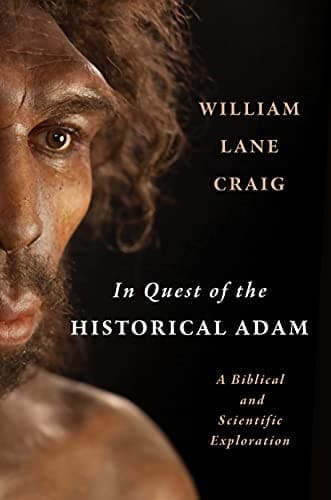
In Quest of the Historical Adam: A Biblical and Scientific Exploration
في البحث عن آدم التاريخي: استكشاف كتابي وعلمي
À la recherche de l'Adam historique : Une exploration biblique et scientifique
Editorial summary
Craig's monograph represents a significant intervention in the debate over human origins from the perspective of philosophical theology and biblical hermeneutics. The work addresses the apparent conflict between traditional Christian doctrine regarding Adam as the progenitor of humanity and contemporary scientific consensus on human evolution. Craig argues that affirming a historical Adam remains intellectually viable while accepting mainstream evolutionary science, though this requires careful recalibration of traditional interpretations.
The author develops his argument through three interconnected approaches. First, Craig undertakes extensive analysis of ancient Near Eastern creation myths to establish the literary genre of Genesis 1-11, concluding these texts constitute "mytho-history" rather than pure myth or straightforward historical narrative. This genre classification allows him to identify historical kernels within mythological frameworks. Second, he examines New Testament references to Adam, particularly in Paul's writings, arguing these passages require some form of historical referent while not necessarily demanding traditional readings. Third, Craig engages extensively with paleoanthropology, genetics, and evolutionary biology to identify scientifically plausible candidates for a historical Adam and Eve.
Craig's central proposal locates Adam and Eve as members of Homo heidelbergensis existing approximately 750,000 years ago, from whom all anatomically modern humans descend. This dating attempts to satisfy both genetic evidence requiring ancient common ancestors and theological requirements for universal human descent from a primordial pair. He argues this reconciliation preserves essential Christian doctrines—including original sin, the fall, and Christ's role as second Adam—while remaining consistent with scientific evidence.
The work engages critically with young earth creationism, which Craig rejects as scientifically untenable, and purely mythological readings that deny any historical Adam, which he considers theologically inadequate. His mediating position draws on scholars like John Walton on ancient Near Eastern contexts and Joshua Swamidass on genetic ancestry, while challenging both fundamentalist and liberal Protestant approaches.
Craig's contribution matters for several reasons. It demonstrates sophisticated engagement with scientific literature from a conservative theological perspective, potentially modeling productive dialogue between religious and scientific communities. The work also illustrates how traditional religious doctrines might adapt to scientific discoveries without abandoning core commitments. However, critics from both scientific and theological camps may find his synthesis problematic—scientists might question his selective use of evidence, while theologians might resist his mytho-historical reading of Genesis.
Argument formulations engaged
Related works
Craig, William Lane (2021). In Quest of the Historical Adam: A Biblical and Scientific Exploration. Eerdmans.
@book{in-quest-of-the-historical-adam-a-biblic,
  author    = {Craig, William Lane},
  title     = {In Quest of the Historical Adam: A Biblical and Scientific Exploration},
  year      = {2021},
  publisher = {Eerdmans},
  url       = {https://god-database.com/en/works/in-quest-of-the-historical-adam-a-biblical-and-scientific-exploration-2021}
}