
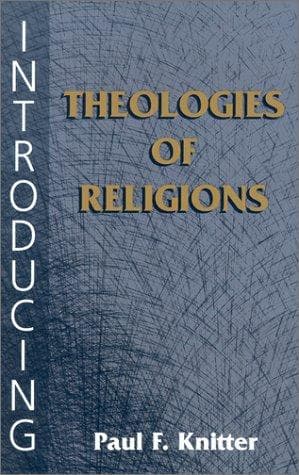
Introducing Theologies of Religions
مقدمة في لاهوت الأديان
Introduction aux théologies des religions
Editorial summary
This volume provides a comprehensive typological survey of Christian theological approaches to religious pluralism, mapping the major paradigms that have emerged in response to Christianity's encounter with other world religions. Knitter organizes the field through four primary models: replacement (exclusivism), fulfillment (inclusivism), mutuality (pluralism), and acceptance (particularism). Each model represents a distinct theological framework for understanding the relationship between Christian truth claims and those of other religious traditions.
The replacement model, exemplified by Karl Barth and contemporary evangelical theologians, maintains that Christ provides the sole path to salvation, rendering other religions fundamentally inadequate or false. The fulfillment approach, associated with Karl Rahner and the Second Vatican Council, acknowledges authentic religious truth in non-Christian traditions while maintaining Christian superiority as the ultimate completion of all religious seeking. The mutuality model, advocated by John Hick and Knitter himself, proposes that multiple religions offer equally valid paths to ultimate reality, requiring Christians to abandon claims to absolute or superior truth. The acceptance paradigm, represented by George Lindbeck and postliberal theology, emphasizes the incommensurability of religious worldviews while affirming the integrity of each tradition's internal logic.
Knitter's analysis extends beyond mere categorization to examine the philosophical and theological presuppositions underlying each position. He explores how different understandings of revelation, salvation, truth, and religious language shape these divergent approaches. The work addresses critical questions about the nature of religious knowledge, the possibility of inter-religious dialogue, and the implications of globalization for traditional Christian self-understanding. Knitter demonstrates how each model responds to the tension between maintaining Christian identity and engaging authentically with religious others.
The study proves particularly valuable for its balanced presentation of competing perspectives, allowing readers to grasp the internal coherence of each position while understanding its limitations. Knitter's framework has become standard in religious studies and theology programs for organizing discussions about religious diversity. His typology illuminates how theological assumptions about God, revelation, and salvation directly influence practical approaches to interfaith encounter, missionary activity, and social cooperation across religious boundaries. The work serves as both an introduction to and critical analysis of Christianity's ongoing struggle to reconcile its universal claims with the irreducible fact of religious plurality in human experience.
Argument formulations engaged
Knitter, Paul (2002). Introducing Theologies of Religions.
@book{introducing-theologies-of-religions-2002,
  author    = {Knitter, Paul},
  title     = {Introducing Theologies of Religions},
  year      = {2002},
  url       = {https://god-database.com/en/works/introducing-theologies-of-religions-2002}
}