
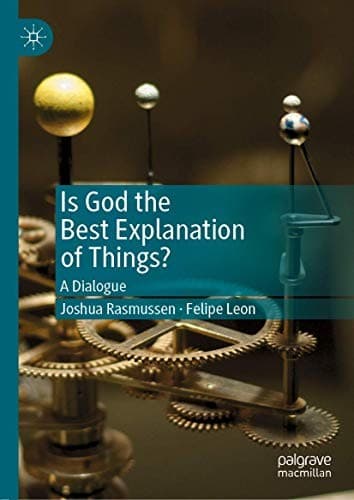
Is God the Best Explanation of Things? A Dialogue
هل الله أفضل تفسير للأشياء؟ حوار
Dieu est-il la meilleure explication des choses ? Un dialogue
Editorial summary
This monograph presents a philosophical dialogue between a theist and a skeptic examining whether God provides the best explanation for fundamental features of reality. Rasmussen structures the work as an accessible yet rigorous conversation that explores classical and contemporary arguments about divine existence through the lens of explanatory power and inference to the best explanation.
The dialogue format allows Rasmussen to present opposing viewpoints sympathetically while advancing the discussion through careful analysis of key metaphysical puzzles. The interlocutors examine whether theism better explains phenomena such as the existence of contingent beings, consciousness, moral values, fine-tuning, and the applicability of mathematics to physical reality. Rather than presenting a one-sided case, the work models philosophical inquiry as a collaborative search for truth, with each participant raising substantive objections and refining positions in response to criticism.
Rasmussen's approach differs from traditional natural theology by emphasizing explanatory virtues rather than deductive proofs. The theistic interlocutor argues that God as a necessary, conscious, and morally perfect being provides a more unified and elegant explanation of diverse phenomena than naturalistic alternatives. The skeptical voice presses challenges concerning divine hiddenness, evil, and the coherence of necessary existence, while proposing alternative explanations rooted in brute facts or naturalistic principles.
The work engages contemporary debates in philosophy of religion, particularly discussions of modal ontological arguments, the principle of sufficient reason, and Bayesian approaches to natural theology. Rasmussen incorporates insights from recent work on consciousness, grounding, and fundamentality, showing how developments in metaphysics bear on classical theological questions. The dialogue addresses objections from figures like Graham Oppy, J.L. Mackie, and Paul Draper while building on positive arguments from Richard Swinburne, Alexander Pruss, and Robin Collins.
By modeling respectful disagreement and intellectual humility, the monograph contributes to a more constructive approach to god debates. Rather than treating theism and atheism as entrenched positions, Rasmussen presents them as competing explanatory frameworks that can be rationally evaluated. The work demonstrates how progress in understanding can emerge through patient analysis of arguments and evidence, even when ultimate agreement remains elusive. This methodological contribution may prove as significant as the substantive philosophical arguments, offering a template for productive engagement across worldview differences.
Argument formulations engaged
Related works
Rasmussen, Joshua (2019). Is God the Best Explanation of Things? A Dialogue. Palgrave Macmillan.
@book{is-god-the-best-explanation-of-things-a-,
  author    = {Rasmussen, Joshua},
  title     = {Is God the Best Explanation of Things? A Dialogue},
  year      = {2019},
  publisher = {Palgrave Macmillan},
  url       = {https://god-database.com/en/works/is-god-the-best-explanation-of-things-a-dialogue-2019}
}