
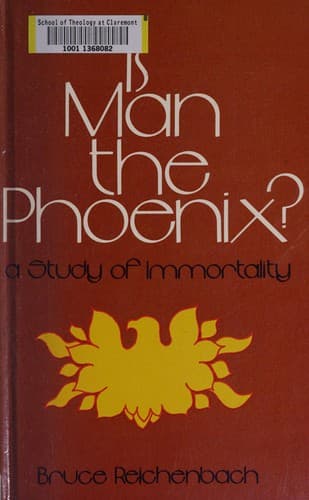
Is Man the Phoenix? A Study of Immortality
هل الإنسان هو العنقاء؟ دراسة في الخلود
L'homme est-il le phénix ? Une étude de l'immortalité
Editorial summary
This monograph examines the philosophical coherence and implications of personal immortality through rigorous analytical philosophy. Reichenbach investigates whether human consciousness can meaningfully persist beyond biological death, engaging with both traditional religious conceptions and contemporary philosophical accounts of personal identity.
The work proceeds through systematic analysis of competing theories of post-mortem survival. Reichenbach first establishes criteria for personal identity over time, examining psychological continuity, memory connections, and bodily resurrection models. He argues that meaningful immortality requires more than mere continued existence—it demands preservation of individual personality, memory, and moral agency. The phoenix metaphor in the title captures this central question: can humans genuinely rise again as the same persons, or would any reconstituted existence constitute a different being?
Reichenbach critically evaluates three primary models of immortality. The Platonic-Cartesian dualist account, which posits an immaterial soul surviving bodily death, faces difficulties explaining soul-body interaction and personal identity without physical continuity. The resurrection model, prominent in Christian theology, must address questions about which body gets resurrected and how identity bridges the temporal gap between death and resurrection. The recreation or replica theory encounters the problem of whether a perfect copy constitutes the same person or merely a duplicate.
The author engages substantively with contemporary philosophers including Sydney Shoemaker on personal identity, John Hick on eschatological verification, and Terence Penelhum on survival paradoxes. Reichenbach demonstrates how each attempted solution generates new philosophical puzzles. His analysis reveals that immortality concepts often presuppose particular metaphysical commitments about consciousness, time, and divine action that require independent justification.
While acknowledging the logical possibility of certain immortality scenarios, Reichenbach emphasizes the conceptual challenges facing any robust account. He argues that philosophical arguments alone cannot establish immortality's actuality—such beliefs ultimately rest on religious faith or metaphysical commitments extending beyond empirical verification. The monograph's significance lies in its careful mapping of the logical terrain surrounding immortality claims, demonstrating which concepts remain coherent and which face insurmountable philosophical obstacles. This analytical rigor helps clarify what religious believers actually claim when affirming personal immortality and what skeptics deny when rejecting such possibilities.
Argument formulations engaged
Reichenbach, Bruce (1978). Is Man the Phoenix? A Study of Immortality. Eerdmans.
@book{is-man-the-phoenix-a-study-of-immortalit,
  author    = {Reichenbach, Bruce},
  title     = {Is Man the Phoenix? A Study of Immortality},
  year      = {1978},
  publisher = {Eerdmans},
  url       = {https://god-database.com/en/works/is-man-the-phoenix-a-study-of-immortality-1978}
}