
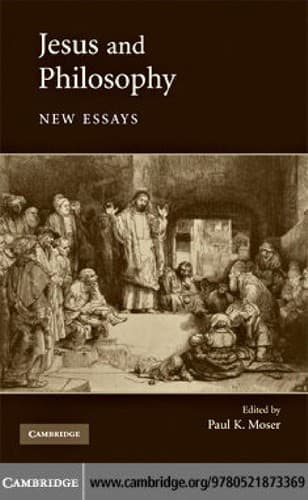
Jesus and Philosophy: New Essays
يسوع والفلسفة: مقالات جديدة
Jésus et la philosophie : Nouveaux essais
Editorial summary
This edited volume examines the philosophical significance of Jesus, arguing that his teachings and person constitute a distinctive philosophical position that challenges both ancient and modern philosophical frameworks. The collection brings together scholars from philosophy, theology, and biblical studies to explore how Jesus' thought relates to central philosophical questions about knowledge, ethics, metaphysics, and human existence.
The essays collectively argue that Jesus presents a radical alternative to conventional philosophical wisdom, particularly Greek philosophical traditions. Contributors examine how Jesus' teachings on topics such as love, forgiveness, suffering, and divine-human relationships offer substantive philosophical content that has been largely overlooked or dismissed by mainstream philosophy. The volume challenges the common assumption that Jesus was merely a religious teacher without philosophical sophistication, demonstrating instead how his parables, ethical teachings, and claims about reality constitute coherent philosophical positions.
Several essays focus on Jesus' epistemology, particularly his emphasis on moral and spiritual perception as prerequisites for certain kinds of knowledge. This approach contrasts sharply with Greek intellectualism and modern epistemological frameworks that prioritize detached rational analysis. Other contributions examine Jesus' ethics, arguing that his love-based morality represents a fundamental challenge to virtue ethics, deontology, and consequentialism. The radical nature of commands to love enemies and forgive without limit is shown to undermine conventional moral philosophy's emphasis on reciprocity and justice.
The volume also addresses metaphysical questions, particularly regarding Jesus' claims about the nature of God, humanity, and their relationship. Contributors explore how Jesus' teaching about the kingdom of God presents an alternative ontology that prioritizes personal relationships and divine action over abstract philosophical categories. Several essays examine how Jesus' approach to human suffering and death offers a distinctive theodicy that differs from philosophical attempts to rationalize evil.
Methodologically, the collection employs both analytical and continental approaches, drawing on biblical scholarship while maintaining philosophical rigor. The essays avoid both uncritical devotion and dismissive skepticism, instead taking Jesus seriously as a philosophical thinker whose ideas merit careful analysis. This approach challenges the separation between philosophy and theology that has dominated Western thought since the Enlightenment, suggesting that Jesus' integration of the two offers important insights for contemporary philosophical debates about meaning, morality, and human flourishing.
Argument formulations engaged
Moser, Paul K. (2008). Jesus and Philosophy: New Essays. Cambridge University Press.
@book{jesus-and-philosophy-new-essays-2008,
  author    = {Moser, Paul K.},
  title     = {Jesus and Philosophy: New Essays},
  year      = {2008},
  publisher = {Cambridge University Press},
  url       = {https://god-database.com/en/works/jesus-and-philosophy-new-essays-2008}
}