
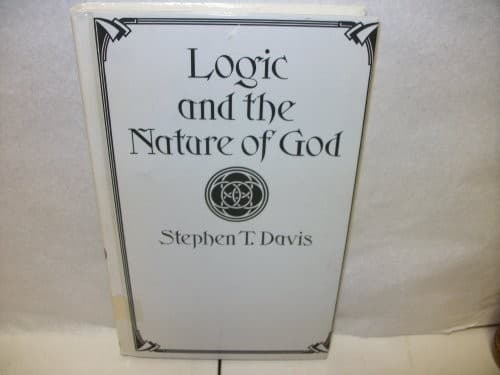
Logic and the Nature of God
المنطق وطبيعة الله
La logique et la nature de Dieu
Editorial summary
This monograph presents a rigorous philosophical defense of theism through the application of formal logic to traditional questions about divine attributes and their coherence. Davis examines whether the concept of God as traditionally conceived in Western theism withstands logical scrutiny, addressing challenges from both atheistic philosophers and internal tensions within theistic thought itself.
The work systematically analyzes key divine attributes including omnipotence, omniscience, immutability, eternity, and divine goodness. Davis employs the tools of contemporary analytic philosophy, particularly modal logic and possible worlds semantics, to clarify these concepts and defend their logical consistency. Against philosophers like J.L. Mackie and Antony Flew who argue that divine attributes generate insurmountable paradoxes, Davis contends that apparent contradictions dissolve under careful logical analysis and proper conceptual refinement.
A central contribution involves Davis's treatment of the paradox of omnipotence, where he argues that divine power should be understood as the ability to actualize any logically possible state of affairs, rather than the incoherent notion of doing the logically impossible. Similarly, his analysis of divine foreknowledge addresses the apparent conflict between omniscience and human freedom by distinguishing between different modes of necessity and exploring compatibilist solutions.
The monograph engages extensively with the logical problem of evil, defending the free will theodicy against objections that an omnipotent God could create free beings who always choose good. Davis argues that genuine freedom requires the real possibility of choosing evil, making a world with free creatures who never sin logically impossible. His treatment draws on Alvin Plantinga's free will defense while developing independent arguments about the nature of moral responsibility.
Methodologically, Davis combines technical philosophical analysis with accessibility, making complex logical arguments comprehensible without sacrificing rigor. He situates his work within the tradition of perfect being theology while incorporating insights from contemporary philosophy of religion. The monograph represents a significant contribution to natural theology's revival in late twentieth-century philosophy, demonstrating that theistic belief can withstand and benefit from logical scrutiny.
Throughout, Davis maintains that proper logical analysis supports rather than undermines traditional theism. His work provides theistic philosophers with sophisticated tools for defending divine attributes while challenging atheistic critics to engage with more nuanced formulations of classical theistic claims.
Argument formulations engaged
Davis, Stephen T. (1983). Logic and the Nature of God. Palgrave Macmillan.
@book{logic-and-the-nature-of-god-1983,
  author    = {Davis, Stephen T.},
  title     = {Logic and the Nature of God},
  year      = {1983},
  publisher = {Palgrave Macmillan},
  url       = {https://god-database.com/en/works/logic-and-the-nature-of-god-1983}
}