
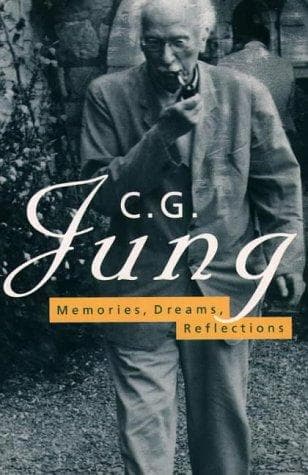
Memories, Dreams, Reflections
ذكريات وأحلام وتأملات
Souvenirs, rêves, réflexions
Editorial summary
This posthumous autobiography presents Jung's mature reflections on the religious dimensions of human psychology, offering a distinctive contribution to twentieth-century debates about God through the lens of analytical psychology. Jung examines religious experience not through traditional theological or philosophical categories, but as fundamental psychological phenomena requiring empirical investigation. The work synthesizes decades of clinical observation, personal experience, and cross-cultural study to argue that religious symbols and experiences emerge from the deepest layers of the human psyche.
Jung's approach challenges both conventional religious belief and materialist reductionism. Against Freud's dismissal of religion as neurotic illusion, Jung presents religious experience as psychologically necessary and authentic, though he carefully avoids metaphysical claims about the objective existence of God. The text explores how archetypal images of the divine emerge spontaneously in dreams, visions, and symbolic systems across cultures, suggesting these patterns reflect structural features of the psyche rather than arbitrary cultural constructions. Jung's famous statement that "God is a psychic fact" encapsulates his position: the divine manifests as an undeniable psychological reality regardless of its ontological status.
The work's significance lies in its reframing of the God question from metaphysical to phenomenological terms. Jung examines his own religious experiences, including childhood visions and his encounter with the unconscious documented in the Red Book, as data for understanding how the psyche generates and engages with numinous content. His concept of individuation presents psychological development as inherently involving confrontation with religious symbols and integration of the God-image within the Self archetype.
Jung's methodology combines introspective analysis with comparative study of religious symbolism, drawing extensively from Christianity, Gnosticism, alchemy, and Eastern traditions. This syncretistic approach positions religious diversity not as competing truth claims but as varied expressions of universal psychological processes. The work thus offers a psychological hermeneutic for interpreting religious phenomena that sidesteps traditional debates between theism and atheism.
The text's influence extends beyond psychology into religious studies, providing a framework for understanding religious experience that acknowledges its psychological reality while remaining agnostic about metaphysical claims. Jung's insistence that modern individuals must rediscover authentic religious experience through psychological work rather than institutional belief continues to shape contemporary discussions about spirituality, depth psychology, and the psychological functions of religious symbols in secular contexts.
Argument formulations engaged
Jung, Carl (1962). Memories, Dreams, Reflections. Vintage.
@book{memories-dreams-reflections-1962,
  author    = {Jung, Carl},
  title     = {Memories, Dreams, Reflections},
  year      = {1962},
  publisher = {Vintage},
  url       = {https://god-database.com/en/works/memories-dreams-reflections-1962}
}