
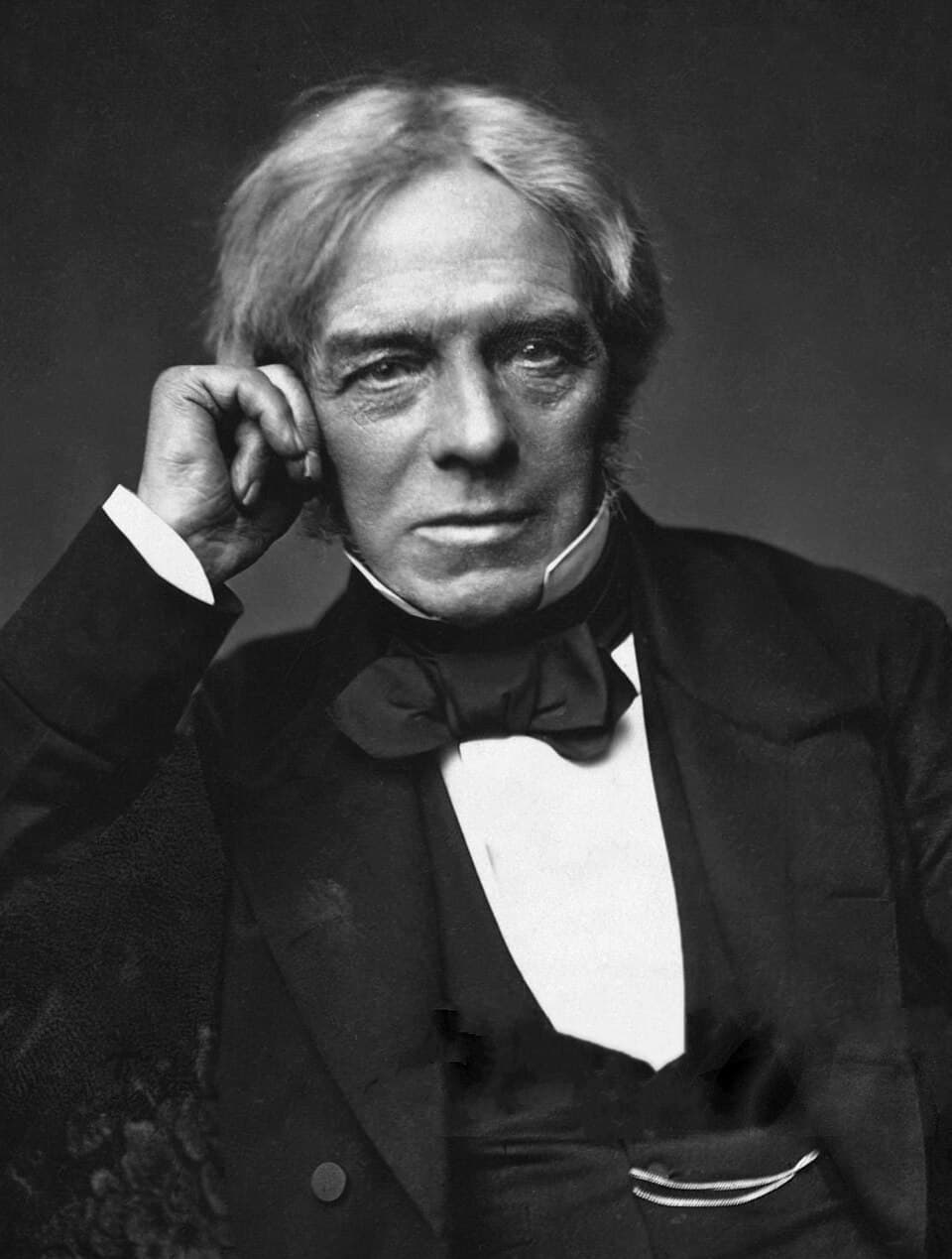
Michael Faraday: Sandemanian and Scientist
مايكل فاراداي: الساندمانياني والعالم
Michael Faraday : Sandémanien et scientifique
Editorial summary
This monograph examines the profound relationship between Michael Faraday's religious convictions as a member of the Sandemanian church and his pioneering scientific work in the 19th century. Cantor challenges the conventional historiographical separation of Faraday's faith from his natural philosophy, demonstrating instead how his theological worldview fundamentally shaped his approach to scientific investigation and his understanding of nature's laws.
The work situates Faraday within the specific context of Sandemanianism, a small Protestant sect that emphasized Biblical literalism, communal discipline, and separation from worldly affairs. Cantor argues that this religious framework provided Faraday with both epistemological foundations and methodological principles that informed his experimental practice. The Sandemanian emphasis on reading God's "book of nature" alongside scripture encouraged Faraday's meticulous empirical observations while maintaining his conviction that natural laws reflected divine order.
Cantor's analysis reveals how Faraday's theology influenced his scientific concepts, particularly his theories of force and field. The author demonstrates that Faraday's rejection of atomism and action-at-a-distance in favor of continuous fields of force stemmed partly from his belief in God's omnipresence and immediate activity throughout creation. This theological commitment to divine immanence made Faraday receptive to ideas about the unity and convertibility of natural forces, leading to his groundbreaking discoveries in electromagnetic induction and electrochemistry.
The monograph contributes to broader debates about science and religion by providing a nuanced case study that moves beyond simplistic conflict or harmony models. Cantor shows how religious commitment could provide resources for scientific innovation rather than obstacles to it. His work challenges both secularist narratives that minimize religion's role in scientific development and apologetic accounts that oversimplify the relationship between faith and natural philosophy.
Through careful analysis of Faraday's correspondence, laboratory notebooks, and religious writings, Cantor reconstructs a worldview in which experimental science served as a form of natural theology. This perspective offers important insights for understanding how theological assumptions shape scientific practice and how religious minorities contributed to mainstream scientific culture. The study demonstrates that examining scientists' religious contexts remains essential for comprehending the historical development of scientific thought and its metaphysical underpinnings.
Argument formulations engaged
Cantor, Geoffrey (1991). Michael Faraday: Sandemanian and Scientist. Palgrave Macmillan.
@book{michael-faraday-sandemanian-and-scientis,
  author    = {Cantor, Geoffrey},
  title     = {Michael Faraday: Sandemanian and Scientist},
  year      = {1991},
  publisher = {Palgrave Macmillan},
  url       = {https://god-database.com/en/works/michael-faraday-sandemanian-and-scientist-1991}
}