
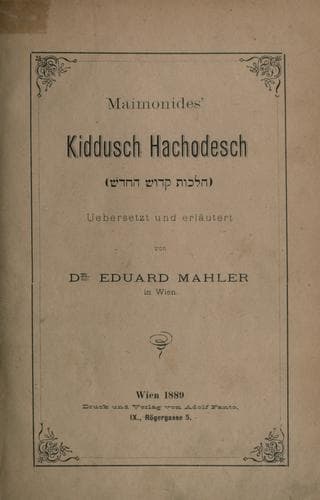
Mishneh Torah
مشنه توراه
Editorial summary
Moses Maimonides' Mishneh Torah represents a monumental systematization of Jewish law that simultaneously advances sophisticated philosophical arguments for God's existence and nature. Written in clear Hebrew rather than the Aramaic of the Talmud, this fourteen-volume code organizes the entirety of Jewish law while grounding legal practice in rigorous theological foundations.
The work opens with the Book of Knowledge, where Maimonides establishes fundamental principles about God that undergird the entire legal system. He argues that knowledge of God constitutes the first commandment, making theology not merely speculative but legally obligatory. Through philosophical demonstration, he establishes God's existence as a necessary being, utterly incorporeal and absolutely unified. This philosophical theology draws heavily on Aristotelian metaphysics, particularly the argument from motion, while maintaining strict biblical monotheism.
Maimonides systematically refutes anthropomorphism, arguing that biblical descriptions of God's emotions or physical attributes must be understood figuratively. He develops a sophisticated via negativa, contending that positive attributes cannot properly be predicated of God without compromising divine simplicity. This philosophical rigor serves a practical purpose: correct beliefs about God determine the validity of worship and the fulfillment of commandments.
The text engages critically with Islamic Kalam theology, rejecting occasionalism and defending natural causation as compatible with divine providence. Against certain rabbinic traditions that emphasized God's immanence through mystical speculation, Maimonides insists on God's absolute transcendence, accessible to human reason only through creation's testimony to divine wisdom.
Throughout the work, Maimonides demonstrates how philosophical theology shapes religious law. Laws of idolatry, for instance, follow from metaphysical principles about God's incorporeality. Prayer regulations reflect theological convictions about divine knowledge and providence. The sabbatical and festival laws encode philosophical truths about creation and divine sovereignty.
The Mishneh Torah's lasting contribution lies in its integration of Aristotelian philosophy with biblical theology and rabbinic law. By making philosophical knowledge of God a religious obligation and grounding practical observance in theoretical understanding, Maimonides transforms both Jewish theology and practice. His work establishes reason as essential to faith while maintaining revelation's authority, creating a synthesis that profoundly influenced subsequent Jewish, Christian, and Islamic thought on the relationship between philosophy and theology.
Argument formulations engaged
Related works
Maimonides, Moses (1180). Mishneh Torah.
@book{mishneh-torah-1180,
  author    = {Maimonides, Moses},
  title     = {Mishneh Torah},
  year      = {1180},
  url       = {https://god-database.com/en/works/mishneh-torah-1180}
}