
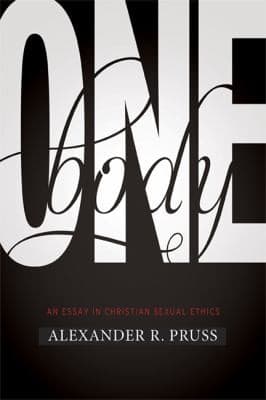
One Body: An Essay in Christian Sexual Ethics
جسد واحد: مقال في الأخلاق الجنسية المسيحية
Un seul corps : Essai d'éthique sexuelle chrétienne
Editorial summary
Alexander Pruss's One Body: An Essay in Christian Sexual Ethics presents a systematic philosophical defense of traditional Christian sexual morality grounded in natural law theory and the theology of the body. The work develops a comprehensive account of sexual ethics that links human sexuality intrinsically to both procreation and marital union, while engaging contemporary philosophical debates about personal identity, embodiment, and moral reasoning.
Pruss argues that sexual acts possess an inherent teleology oriented toward both procreation and the unity of spouses within marriage. Drawing on Thomistic natural law theory and phenomenological insights about embodiment, he contends that the human body and its sexual faculties have objective purposes that generate moral norms. The work explicitly connects this sexual ethics to theistic metaphysics, arguing that God's creative intentions for human nature provide the foundation for understanding proper sexual conduct. Pruss maintains that departures from this teleological framework—including contraception, homosexual acts, and extramarital sex—violate the intrinsic purposes of human sexuality.
The monograph engages critically with secular approaches to sexual ethics, particularly consequentialist and autonomy-based frameworks that ground sexual morality primarily in consent and harm prevention. Pruss argues these approaches fail to capture the full moral significance of sexuality and its connection to human flourishing. He also addresses revisionist Christian perspectives that attempt to accommodate contemporary sexual practices within a modified natural law framework, defending instead a more traditional interpretation that sees the procreative and unitive dimensions of sexuality as inseparable.
Methodologically, Pruss combines rigorous analytical philosophy with theological reflection, drawing on sources ranging from Aristotle and Aquinas to contemporary philosophers of action and personal identity. His arguments frequently invoke thought experiments and careful conceptual analysis to defend controversial positions, such as the claim that contraception is intrinsically wrong even within marriage.
The work contributes to debates about God and morality by exemplifying how theistic commitments shape ethical reasoning about contested moral issues. Pruss demonstrates how belief in divine creation and natural teleology generates specific moral conclusions that diverge sharply from secular ethics. While not primarily focused on arguments for God's existence, the monograph illustrates how theistic metaphysics provides resources for defending substantive moral positions that many find difficult to ground in purely naturalistic terms.
Argument formulations engaged
Related works
Pruss, Alexander (2013). One Body: An Essay in Christian Sexual Ethics. University of Notre Dame Press.
@book{one-body-an-essay-in-christian-sexual-et,
  author    = {Pruss, Alexander},
  title     = {One Body: An Essay in Christian Sexual Ethics},
  year      = {2013},
  publisher = {University of Notre Dame Press},
  url       = {https://god-database.com/en/works/one-body-an-essay-in-christian-sexual-ethics-2013}
}