
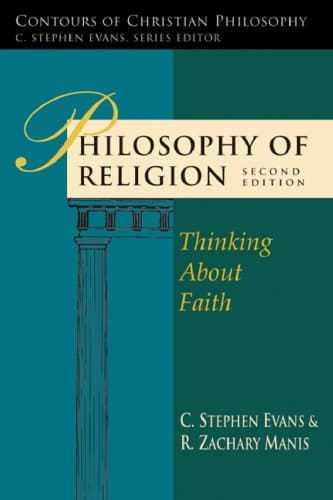
Philosophy of Religion: Thinking About Faith
فلسفة الدين: التفكير في الإيمان
Philosophie de la religion : Réfléchir sur la foi
Editorial summary
This introductory textbook provides a systematic examination of philosophical issues surrounding religious belief, particularly within the Christian tradition. Evans structures his analysis around key questions that have defined philosophy of religion since the Enlightenment: the rationality of religious belief, the coherence of theistic concepts, arguments for God's existence, the problem of evil, miracles, and religious experience.
The work adopts what Evans terms a "critical dialogue" approach, presenting major positions on each issue while engaging seriously with both theistic and atheistic arguments. Unlike purely neutral surveys, Evans writes from an explicitly Christian perspective while maintaining philosophical rigor. He argues that religious belief can be rationally defended without requiring proof in the strong foundationalist sense. Drawing on reformed epistemology, particularly the work of Plantinga and Wolterstorff, Evans contends that belief in God may be properly basic—rationally held without being based on other beliefs or arguments.
Regarding traditional theistic arguments, Evans provides careful exposition of cosmological, teleological, and ontological arguments while acknowledging their limitations. He suggests these arguments function better as confirmations of existing faith rather than as means of compelling belief in non-believers. His treatment of the problem of evil exemplifies his balanced approach: while presenting the logical and evidential versions of the problem, he develops several theodicies and defenses, ultimately arguing that evil's existence does not render theistic belief irrational.
The text makes significant contributions to discussions of religious epistemology and the relationship between faith and reason. Evans challenges both fideistic approaches that divorce faith from rational assessment and evidentialist demands that religious belief meet scientific standards of proof. His analysis of miracles engages with Humean skepticism while defending their conceptual possibility and potential evidential value.
Written during the resurgence of Christian philosophy in Anglo-American contexts, the work serves both pedagogical and constructive purposes. It introduces students to central debates while advancing a moderate position that affirms reason's role in religious belief without reducing faith to rational demonstration. Evans's framework has influenced subsequent evangelical philosophical scholarship and provides a foundation for understanding contemporary debates about reformed epistemology, natural theology, and the rationality of theism.
Argument formulations engaged
Evans, C. Stephen (1985). Philosophy of Religion: Thinking About Faith. IVP.
@book{philosophy-of-religion-thinking-about-fa,
  author    = {Evans, C. Stephen},
  title     = {Philosophy of Religion: Thinking About Faith},
  year      = {1985},
  publisher = {IVP},
  url       = {https://god-database.com/en/works/philosophy-of-religion-thinking-about-faith-1985}
}