
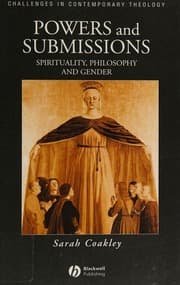
Powers and Submissions: Spirituality, Philosophy and Gender
قوى وخضوع: الروحانية والفلسفة والجنس
Pouvoirs et soumissions : Spiritualité, philosophie et genre
Editorial summary
This monograph presents a constructive theological approach to the relationship between spirituality, philosophy, and gender, arguing that contemplative practice offers crucial resources for reimagining divine power and human vulnerability. Coakley develops a distinctive theological method that integrates systematic theology with lived spiritual practice, particularly focusing on the tradition of Christian contemplative prayer.
The work advances a central thesis about kenosis or self-emptying, drawing from Philippians 2 to reconceptualize divine power not as domination but as a form of non-coercive love that paradoxically empowers through vulnerability. Coakley argues that traditional philosophical theology has often misconceived both divine and human power by operating within masculinist frameworks that equate strength with control and submission with weakness. Against this tendency, she proposes that contemplative practice reveals an alternative understanding where vulnerability before God becomes a source of transformation rather than diminishment.
Methodologically, the text employs what Coakley terms "theologie totale," an approach that refuses to separate systematic theology from spirituality, philosophy from prayer, or theory from practice. This integration allows her to challenge the conventional boundaries between academic theology and lived faith, arguing that the practice of silent prayer provides epistemic access to theological truths unavailable through purely rational analysis. The work engages critically with both analytic philosophy of religion and continental thought, while drawing extensively from patristic and medieval contemplative traditions.
The gender analysis proves particularly significant for contemporary debates about God and power. Coakley demonstrates how traditional theological language about divine sovereignty has been shaped by patriarchal assumptions, yet argues against simply rejecting such language. Instead, she proposes a transformation from within, showing how contemplative practice can subvert gendered hierarchies while maintaining theological orthodoxy. This move challenges both conservative defenses of traditional God-language and feminist rejections of classical theism.
The monograph's importance lies in its sophisticated integration of spiritual practice with rigorous philosophical analysis, offering a third way beyond the sterile opposition between fideism and rationalism in contemporary philosophy of religion. By grounding theological reflection in contemplative practice, Coakley provides resources for reconceiving divine-human relations in ways that neither compromise divine transcendence nor perpetuate oppressive power dynamics. The work thus contributes to debates about theological method, the nature of religious knowledge, and the relationship between spirituality and social transformation.
Argument formulations engaged
Related works
Coakley, Sarah (2002). Powers and Submissions: Spirituality, Philosophy and Gender. Wiley-Blackwell.
@book{powers-and-submissions-spirituality-phil,
  author    = {Coakley, Sarah},
  title     = {Powers and Submissions: Spirituality, Philosophy and Gender},
  year      = {2002},
  publisher = {Wiley-Blackwell},
  url       = {https://god-database.com/en/works/powers-and-submissions-spirituality-philosophy-and-gender-2002}
}