
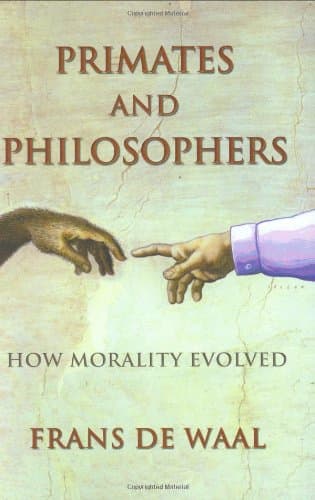
Primates and Philosophers.. How Morality evolved
الرئيسيات والفلاسفة.. كيف تطورت الأخلاق
Primates et philosophes.. Comment la morale a évolué
Human morality is not a divine gift or a purely rational construction but an evolved capacity rooted in the social emotions and prosocial behaviors observable in other primates.
Editorial summary
Frans de Waal's "Primates and Philosophers: How Morality Evolved" presents a naturalistic account of moral origins that challenges traditional philosophical and theological views about the uniqueness of human morality. De Waal, a primatologist, argues that moral behavior emerges from evolved emotional and social capacities shared with other primates, rather than from divine commandments, pure reason, or cultural invention alone.
The work directly confronts what de Waal terms "Veneer Theory" — the view that morality is a thin cultural overlay masking fundamentally selfish human nature. This theory, which de Waal associates with Thomas Hobbes, T.H. Huxley, and contemporary thinkers like Richard Dawkins, suggests that genuine altruism requires transcending our biological nature through reason, culture, or divine grace. De Waal counters with extensive evidence from primatology showing that empathy, reciprocity, conflict resolution, and proto-moral sentiments exist in our closest evolutionary relatives.
De Waal's methodology combines empirical observation of primate behavior with philosophical analysis, creating a dialogue between scientific findings and moral theory. He documents instances of consolation, sharing, and fairness concerns among chimpanzees and bonobos, arguing these behaviors indicate moral building blocks that predate human evolution. The work includes responses from philosophers Peter Singer, Christine Korsgaard, Philip Kitcher, and others, creating a genuinely dialogical exploration of morality's foundations.
The implications for theological debates are significant though largely implicit. If morality evolved gradually from pre-existing social emotions rather than appearing uniquely in humans, this challenges accounts that ground ethics in divine commands or the imago Dei. De Waal maintains an agnostic stance on ultimate questions while insisting that understanding morality's biological roots need not diminish its importance or validity.
The work's contribution lies in reframing the relationship between biology and ethics. Rather than viewing evolution as an obstacle to genuine morality that must be overcome through transcendent sources, de Waal presents it as morality's foundation. This naturalistic account provides an alternative to both divine command theories and rationalist approaches that disconnect ethics from emotion and embodiment. While not directly addressing God's existence, the work challenges conceptual frameworks that make divine grounding seem necessary for authentic moral behavior, suggesting instead that morality emerges from our evolved nature as social primates.
Structured analysis
Argument formulations engaged
Related works
De Waal, Frans (2006). Primates and Philosophers.. How Morality evolved.
@book{primates-and-philosophers-how-morality-e,
  author    = {De Waal, Frans},
  title     = {Primates and Philosophers.. How Morality evolved},
  year      = {2006},
  url       = {https://god-database.com/en/works/primates-and-philosophers-how-morality-evolved}
}