
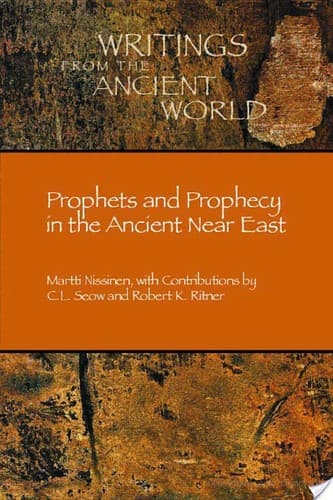
Prophets and Prophecy in the Ancient Near East (Writings from the Ancient World
الأنبياء والنبوة في الشرق الأدنى القديم (كتابات من العالم القديم
Prophètes et prophétie dans le Proche-Orient ancien (Écrits du monde antique
Prophetic phenomena in the ancient Near East constitute a cross-cultural institution attested across multiple textual traditions, whose comparative study illuminates the broader historical and social contexts of biblical and Near Eastern prophecy.
Editorial summary
This comprehensive anthology presents the first systematic collection of ancient Near Eastern prophetic texts in English translation, offering crucial primary source material for understanding prophecy as a widespread phenomenon across ancient Mediterranean and Mesopotamian cultures. Nissinen assembles texts from Mari (18th century BCE), Neo-Assyrian sources (7th century BCE), and other ancient contexts, providing detailed introductions, translations, and scholarly apparatus that illuminate the social, political, and religious dimensions of ancient prophecy.
The work's primary contribution lies in demonstrating that biblical prophecy, often invoked in arguments for divine revelation, emerged within a broader cultural matrix of prophetic practices. By presenting parallel texts from Israel's neighbors, Nissinen enables readers to observe striking similarities in prophetic forms, functions, and claims across different religious systems. The Mari letters, for instance, reveal prophets delivering divine messages to kings through dreams and ecstatic states, while Neo-Assyrian texts document prophecies supporting royal ideology through oracular pronouncements. These parallels complicate traditional arguments that treat biblical prophecy as unique evidence for divine communication.
Nissinen's textual-analytical approach emphasizes careful philological work while attending to the social contexts of prophetic utterance. His introductions explain how prophets functioned as intermediaries between divine and human realms across different cultures, serving similar roles in legitimating political power, providing divine guidance, and mediating cosmic knowledge. This comparative framework challenges apologetic uses of prophecy by showing how similar phenomena appeared in polytheistic contexts that modern theists would not accept as genuine divine revelation.
The anthology's significance extends beyond historical documentation. By making these texts accessible to scholars of religion, theology, and biblical studies, Nissinen provides essential data for evaluating claims about prophecy's evidential value in theistic arguments. His work demonstrates that appeals to fulfilled prophecy or prophetic authority must reckon with the widespread nature of such claims across ancient religions. While Nissinen maintains scholarly neutrality, avoiding explicit theological judgments, his careful presentation of comparative evidence furnishes important material for assessing how prophecy functions in debates about divine action, revelation, and religious epistemology. The work thus serves as an indispensable resource for anyone examining prophetic traditions' role in arguments about God's existence and nature.
Structured analysis
Argument formulations engaged
Nissinen, Martti (2003). Prophets and Prophecy in the Ancient Near East (Writings from the Ancient World. Society of Biblical Literature.
@book{prophets-and-prophecy-in-the-ancient-nea,
  author    = {Nissinen, Martti},
  title     = {Prophets and Prophecy in the Ancient Near East (Writings from the Ancient World},
  year      = {2003},
  publisher = {Society of Biblical Literature},
  url       = {https://god-database.com/en/works/prophets-and-prophecy-in-the-ancient-near-east-writings-from-the-ancient-world}
}