
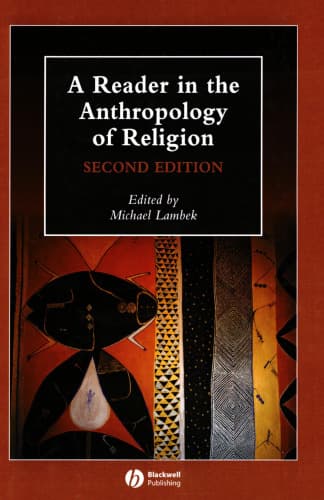
Reader in the Anthropology of Religion
قارئ في أنثروبولوجيا الدين
Recueil d'anthropologie de la religion
Editorial summary
This edited volume assembles key texts examining religious phenomena through anthropological lenses, offering critical perspectives on how the academic study of religion has evolved within anthropology. Fitzgerald curates selections that challenge conventional approaches to understanding religious practices, beliefs, and institutions across diverse cultural contexts.
The collection demonstrates how anthropological methods have transformed the study of religion from theological or phenomenological approaches toward empirically grounded ethnographic analysis. Rather than treating religion as a sui generis category requiring special explanatory frameworks, the selected texts situate religious phenomena within broader social, political, and economic contexts. This methodological shift reveals how religious practices function as systems of meaning-making, social organization, and power relations within specific cultural settings.
Fitzgerald's editorial framework emphasizes the discipline's movement away from essentialist definitions of religion toward constructivist analyses that examine how the category of "religion" itself emerges through particular historical and cultural processes. The volume traces anthropology's critical engagement with Western-centric assumptions about what constitutes religion, showing how ethnographic encounters with non-Western societies have problematized universal categories derived from Christian theological traditions.
The selected readings illuminate anthropology's contribution to debates about religious experience, ritual practice, and symbolic systems. Through detailed ethnographic case studies, the texts demonstrate how religious phenomena cannot be adequately understood apart from their embeddedness in specific social worlds. This approach challenges both reductionist explanations that dismiss religious claims and theological interpretations that privilege insider perspectives uncritically.
Fitzgerald's compilation addresses fundamental questions about how scholars should approach religious diversity while avoiding both cultural imperialism and relativistic paralysis. The volume engages with broader theoretical debates about representation, translation, and comparison in the human sciences. By foregrounding anthropological critiques of the religion concept itself, the collection contributes to ongoing discussions about whether "religion" represents a valid analytical category or merely projects Western assumptions onto diverse human phenomena.
The reader serves as both a disciplinary history and a theoretical intervention, demonstrating how anthropological approaches have reshaped academic discourse about religion. Through careful selection and framing, Fitzgerald presents anthropology's distinctive contributions to understanding how human communities construct, maintain, and transform their relationships with what they consider sacred, divine, or transcendent.
Argument formulations engaged
Fitzgerald, Thimothy (2002). Reader in the Anthropology of Religion. Wiley Blackwell Publishing.
@book{reader-in-the-anthropology-of-religion-2,
  author    = {Fitzgerald, Thimothy},
  title     = {Reader in the Anthropology of Religion},
  year      = {2002},
  publisher = {Wiley Blackwell Publishing},
  url       = {https://god-database.com/en/works/reader-in-the-anthropology-of-religion-2002}
}