
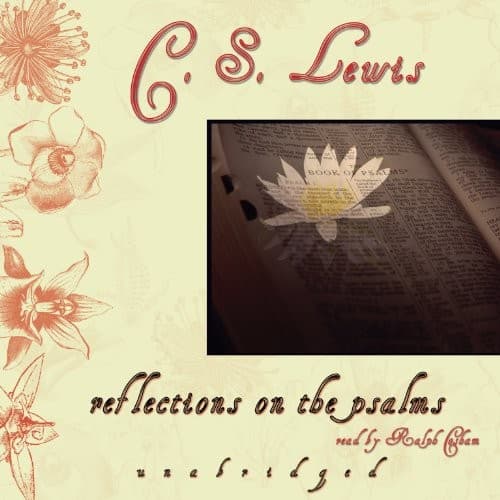
Reflections on the Psalms
تأملات حول المزامير
Réflexions sur les Psaumes
Editorial summary
This work examines the Hebrew Psalms through the lens of a literary scholar and Christian apologist, offering both devotional insights and critical analysis of these ancient religious texts. Lewis approaches the Psalms not as a biblical scholar or theologian, but as a reader encountering profound spiritual literature, acknowledging both their divine inspiration and human authorship.
Lewis addresses several challenging aspects of the Psalms that modern readers find troubling, particularly the cursing psalms and expressions of vindictiveness. Rather than dismissing these elements or offering facile explanations, he explores them as authentic human responses to injustice while maintaining that such sentiments require transformation through Christian charity. He argues that the Psalms present raw human emotion before God, which paradoxically demonstrates both the texts' authenticity and the need for moral development beyond their original context.
The work engages significantly with the question of divine revelation and human participation in sacred texts. Lewis maintains that the Psalms are simultaneously the word of God and thoroughly human documents, rejecting any mechanical theory of inspiration. He emphasizes how the psalmists' experience of God emerges through distinctly Jewish cultural and religious frameworks, yet speaks universally to the human condition. This approach allows him to affirm traditional Christian belief while acknowledging the texts' historical conditioning.
Lewis devotes considerable attention to praising God as the central theme of the Psalms, arguing that praise represents the natural and necessary response to encountering divine reality. He contends that the command to praise God reflects not divine egotism but the fundamental structure of reality where creatures find fulfillment in properly relating to their Creator. This analysis connects to broader arguments about human nature being inherently oriented toward worship and finding ultimate satisfaction only in God.
The work also explores christological readings of the Psalms, examining how Christian tradition has interpreted various passages as prophetic of Christ. Lewis navigates between fundamentalist proof-texting and modernist dismissal, suggesting that such readings emerge naturally from viewing history through the lens of the Incarnation. Throughout, he demonstrates how ancient religious texts continue to mediate divine-human encounter while requiring thoughtful interpretation that respects both their original context and contemporary application.
Argument formulations engaged
Lewis, C.S. (1958). Reflections on the Psalms. Geoffrey Bles.
@book{reflections-on-the-psalms-1958,
  author    = {Lewis, C.S.},
  title     = {Reflections on the Psalms},
  year      = {1958},
  publisher = {Geoffrey Bles},
  url       = {https://god-database.com/en/works/reflections-on-the-psalms-1958}
}