
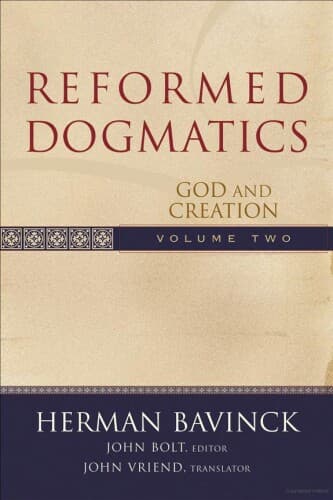
Reformed Dogmatics
العقائد الإصلاحية
Dogmatique réformée
Editorial summary
Herman Bavinck's Reformed Dogmatics represents a monumental systematic theological work that seeks to articulate a comprehensive reformed Christian understanding of divine revelation and the nature of God. Written at the close of the nineteenth century, this four-volume magnum opus engages both with classical theological traditions and contemporary philosophical challenges to Christian theism, positioning itself as a mediating voice between orthodox Reformed theology and modern intellectual currents.
Bavinck constructs his theological system upon the foundational principle of divine revelation, arguing that human knowledge of God derives not from speculative philosophy or natural theology alone, but primarily through God's self-disclosure in Scripture and creation. Against the rationalism of Enlightenment thought and the subjectivism of Schleiermacher's theology of feeling, Bavinck maintains that theology must begin with the objective reality of the triune God who reveals himself. His method combines careful exegesis of biblical texts with extensive engagement with the history of Christian doctrine, from patristic sources through medieval scholasticism to Reformed orthodoxy.
The work addresses the God question through systematic exposition of divine attributes, the Trinity, creation, and providence. Bavinck argues for a robust theological realism that affirms God's transcendence while maintaining divine immanence in creation and history. He critiques both deistic conceptions that remove God from active involvement in the world and pantheistic tendencies that collapse the creator-creature distinction. Particularly significant is his treatment of the relationship between general and special revelation, wherein he argues that while creation bears witness to God, sin has corrupted human perception, necessitating the clarifying lens of Scripture.
Bavinck's contribution to debates about God lies in his sophisticated integration of Reformed orthodoxy with contemporary scholarship. He engages seriously with biblical criticism, natural sciences, and modern philosophy while maintaining core theological commitments. His work influences subsequent Reformed theology by demonstrating how traditional Christian theism can respond to modern challenges without retreating into fundamentalism or capitulating to liberal reductionism. The Reformed Dogmatics remains significant for its comprehensive scope, its balance between confessional commitment and intellectual engagement, and its articulation of a worldview that places the sovereign, triune God at the center of all reality and human understanding.
Argument formulations engaged
Bavinck, Herman (1895). Reformed Dogmatics. Baker Academic.
@book{reformed-dogmatics-1895,
  author    = {Bavinck, Herman},
  title     = {Reformed Dogmatics},
  year      = {1895},
  publisher = {Baker Academic},
  url       = {https://god-database.com/en/works/reformed-dogmatics-1895}
}