
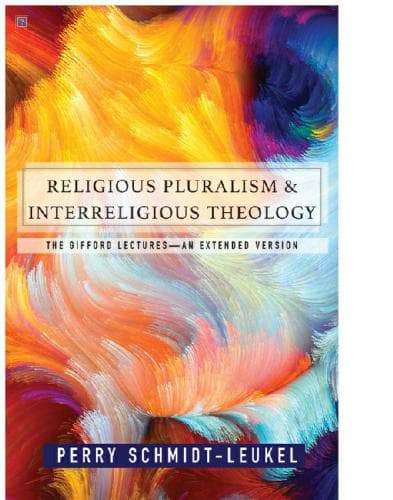
Religious Pluralism and Interreligious Theology
التعددية الدينية واللاهوت بين الأديان
Pluralisme religieux et théologie interreligieuse
Editorial summary
This monograph presents a systematic examination of religious pluralism as both a theological position and a methodological approach to understanding religious diversity. Schmidt-Leukel develops a sophisticated framework for interreligious theology that moves beyond traditional exclusivist and inclusivist models toward a genuinely pluralist understanding of religious truth claims and salvific efficacy.
The work engages critically with the dominant paradigms in theology of religions, particularly challenging the widespread assumption that authentic theological reflection must remain confined within the boundaries of a single tradition. Schmidt-Leukel argues that the reality of religious diversity demands a new theological methodology that takes seriously the truth claims of multiple traditions without reducing them to variations of one's own religious framework. This approach differs markedly from both exclusivist positions that deny salvific value to other religions and inclusivist models that acknowledge other religions only insofar as they approximate one's own tradition.
Central to Schmidt-Leukel's argument is the distinction between confessional theology, which operates from within a single tradition, and interreligious theology, which attempts to think across religious boundaries while maintaining intellectual rigor. He contends that religious pluralism represents not merely tolerance or relativism but a principled theological position that recognizes the possibility of multiple authentic responses to ultimate reality. This position draws on process theology, comparative philosophy, and constructive theological reflection to articulate how different religious traditions might offer complementary rather than contradictory insights into the nature of the divine.
The monograph addresses several critical objections to religious pluralism, including charges of relativism, incoherence, and Western imperialism. Schmidt-Leukel demonstrates how a properly conceived pluralist theology avoids these pitfalls through careful attention to epistemological humility and methodological precision. He engages extensively with critics such as Gavin D'Costa and S. Mark Heim, showing how their objections often rest on misunderstandings of what theological pluralism actually claims.
The work's significance lies in its comprehensive articulation of a viable alternative to traditional theological approaches to religious diversity. By developing a rigorous methodology for interreligious theology, Schmidt-Leukel provides resources for constructive theological engagement across religious boundaries while maintaining intellectual integrity. His framework offers practical implications for interfaith dialogue, comparative theology, and global theological education in an increasingly pluralistic world.
Argument formulations engaged
Schmidt-Leukel, Perry (2017). Religious Pluralism and Interreligious Theology.
@book{religious-pluralism-and-interreligious-t,
  author    = {Schmidt-Leukel, Perry},
  title     = {Religious Pluralism and Interreligious Theology},
  year      = {2017},
  url       = {https://god-database.com/en/works/religious-pluralism-and-interreligious-theology-2017}
}