
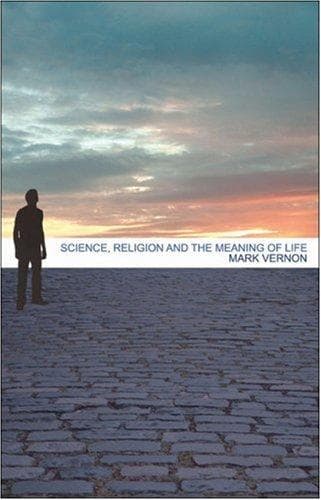
Science, Religion and The Meaning of Life
العلم والدين ومعنى الحياة
Science, religion et le sens de la vie
Science and religion, rather than standing in irreconcilable conflict, together illuminate the deeper question of what makes human life meaningful.
Editorial summary
Vernon's monograph explores the complex interplay between scientific and religious perspectives on fundamental questions of meaning and purpose. Rather than positioning science and religion as inherently antagonistic frameworks, Vernon examines how both domains address ultimate questions about human existence, albeit through different methodological approaches and epistemological assumptions. The work serves as a bridge-building exercise that seeks to identify productive dialogue between scientific and religious worldviews while acknowledging their distinctive contributions to understanding life's meaning.
The author employs a descriptive-analytical methodology that surveys contemporary debates at the intersection of science and religion. Vernon examines how scientific advances, particularly in cosmology, evolutionary biology, and neuroscience, have reshaped traditional religious questions about purpose and meaning. He analyzes various responses from both religious thinkers who engage seriously with scientific findings and scientists who acknowledge the limits of empirical methods in addressing existential questions. This approach allows Vernon to map the contemporary landscape of science-religion dialogue without advocating for either reductionist materialism or anti-scientific religious fundamentalism.
Vernon's engagement with cumulative case arguments reflects his recognition that questions about life's meaning resist simple resolution through single decisive arguments. He examines how different thinkers build multifaceted cases that draw on various sources of evidence and experience. The work analyzes how religious believers incorporate scientific discoveries into their worldviews while maintaining claims about transcendent meaning, and conversely, how some scientists acknowledge that empirical methods cannot fully address questions of value and purpose. Vernon particularly focuses on thinkers who resist dichotomous thinking and instead develop nuanced positions that honor both scientific rigor and religious insight.
The monograph's significance lies in its refusal to accept the "conflict thesis" that dominates popular discourse about science and religion. Vernon demonstrates that serious engagement between these domains continues to generate sophisticated philosophical reflection on perennial questions. His analysis reveals how contemporary thinkers navigate between scientific materialism and religious dogmatism to develop integrated perspectives on meaning. The work contributes to ongoing debates by showing that neither pure scientism nor uncritical faith adequately addresses human questions about purpose and significance. Vernon's careful documentation of various dialogical positions provides resources for readers seeking alternatives to polarized debates, suggesting that the most profound insights about life's meaning may emerge from sustained conversation between scientific and religious perspectives rather than from either domain in isolation.
Structured analysis
Structure of the work
Argument formulations engaged
Vernon, Mark (2007). Science, Religion and The Meaning of Life. Palgrave Macmillan.
@book{science-religion-and-the-meaning-of-life,
  author    = {Vernon, Mark},
  title     = {Science, Religion and The Meaning of Life},
  year      = {2007},
  publisher = {Palgrave Macmillan},
  url       = {https://god-database.com/en/works/science-religion-and-the-meaning-of-life}
}