
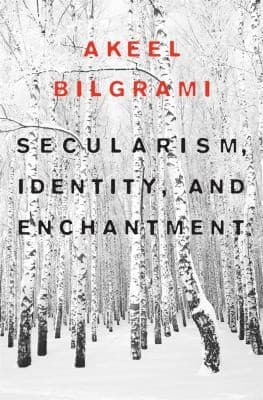
Secularism, Identity, and Enchantment
العلمانية والهوية والسحر
Sécularisme, identité et enchantement
Editorial summary
Akeel Bilgrami's Secularism, Identity, and Enchantment presents a sophisticated philosophical examination of secularism that challenges conventional narratives about religion's role in modern society. The work develops a distinctive approach to understanding secularism not merely as the separation of church and state, but as a complex philosophical and political stance that emerged from specific historical circumstances in early modern Europe. Bilgrami argues that secularism arose primarily as a response to religious conflict rather than from any intrinsic incompatibility between religion and politics.
Central to Bilgrami's analysis is his critique of what he terms "orthodox secularism," which seeks to exclude religion entirely from public discourse. He contends that this exclusionary approach fails to recognize the legitimate role religious perspectives can play in democratic deliberation. Against theorists like Rawls who advocate for public reason devoid of comprehensive doctrines, Bilgrami proposes a more inclusive model that allows religious voices in public debate while maintaining institutional separation. This position situates him within ongoing debates about post-secularism and challenges both strict secularist positions and their religious critics.
The monograph's treatment of enchantment represents another significant contribution to debates about God and meaning in modernity. Bilgrami engages critically with Weber's disenchantment thesis, arguing that the modern world need not be characterized by a complete loss of meaning or value. He explores how secular frameworks might preserve certain forms of enchantment without recourse to traditional religious belief. This discussion connects to broader philosophical questions about whether meaningful human existence requires transcendent foundations.
Methodologically, Bilgrami combines analytical philosophy with intellectual history, tracing the genealogy of secular thought while engaging in conceptual analysis. His approach draws on both Western and non-Western philosophical traditions, particularly when discussing identity formation in secular contexts. The work examines how secularism shapes individual and collective identities, especially in postcolonial settings where Western secular models encounter different religious and cultural frameworks.
Bilgrami's intervention matters for contemporary debates about religious freedom, pluralism, and the public sphere. By rejecting both dogmatic secularism and theocratic alternatives, he opens space for reconsidering how diverse societies might accommodate religious and non-religious worldviews. His nuanced position contributes to discussions about whether secularism represents a neutral framework or itself constitutes a particular stance on ultimate questions, thereby engaging fundamental issues in the philosophy of religion regarding the nature and limits of religious discourse in modern democratic societies.
Argument formulations engaged
Bilgrami, Akeel (2014). Secularism, Identity, and Enchantment. Harvard University Press.
@book{secularism-identity-and-enchantment-2014,
  author    = {Bilgrami, Akeel},
  title     = {Secularism, Identity, and Enchantment},
  year      = {2014},
  publisher = {Harvard University Press},
  url       = {https://god-database.com/en/works/secularism-identity-and-enchantment-2014}
}