
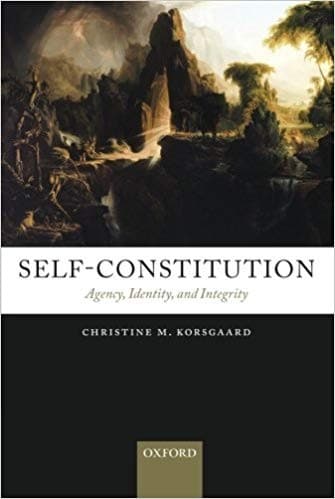
Self-Constitution: Agency, Identity, and Integrity
التكوين الذاتي: الفاعلية والهوية والتكامل
Auto-constitution : Agentivité, identité et intégrité
Editorial summary
This monograph develops Korsgaard's distinctive neo-Kantian account of practical identity and moral agency, with significant implications for understanding the relationship between human nature, normativity, and potential theological frameworks. Building on her earlier work in The Sources of Normativity, Korsgaard argues that rational agents constitute themselves through their actions, creating unified identities through the exercise of practical reason. The work engages critically with Humean and utilitarian traditions while advancing a constitutive model of agency that has sparked considerable debate about the metaphysical status of moral facts and their possible theological grounding.
Korsgaard's central thesis holds that human beings face a fundamental problem of agency: we must act, yet our desires and impulses do not automatically determine what we should do. This predicament generates the need for practical identities—conceptions of ourselves that provide reasons for action. Through acting on principles we can endorse, we simultaneously constitute ourselves as unified agents and generate moral obligations. This process of self-constitution, Korsgaard argues, explains both the nature of normativity and the authority of moral requirements without appeal to external metaphysical facts.
The work's significance for theological discourse emerges through its treatment of several key issues. First, Korsgaard's account of how humans create meaning and value through rational agency challenges both divine command theories and natural law approaches to ethics. By locating the source of normativity in human rational nature rather than divine will or cosmic teleology, she offers a thoroughly secular foundation for morality. Second, her emphasis on the constitutive role of action in forming identity engages questions about human nature traditionally addressed by theological anthropology. Third, the work's neo-Kantian framework maintains the absolute character of moral demands while grounding them in immanent rather than transcendent sources.
Critics from theological perspectives have questioned whether Korsgaard's account can adequately explain the apparent objectivity and universality of moral requirements without some transcendent grounding. Others have explored whether her constitutive model of agency might be compatible with certain theological frameworks that emphasize human participation in divine reason. The monograph's sophisticated treatment of autonomy, rational nature, and moral authority ensures its continued relevance to debates about the possibility of ethics without God and the nature of human dignity in both secular and religious contexts.
Argument formulations engaged
Korsgaard, Christine (2009). Self-Constitution: Agency, Identity, and Integrity. Oxford University Press, USA.
@book{self-constitution-agency-identity-and-in,
  author    = {Korsgaard, Christine},
  title     = {Self-Constitution: Agency, Identity, and Integrity},
  year      = {2009},
  publisher = {Oxford University Press, USA},
  url       = {https://god-database.com/en/works/self-constitution-agency-identity-and-integrity-2009}
}